Day 12. 29/06/2026. El-Hammamiya
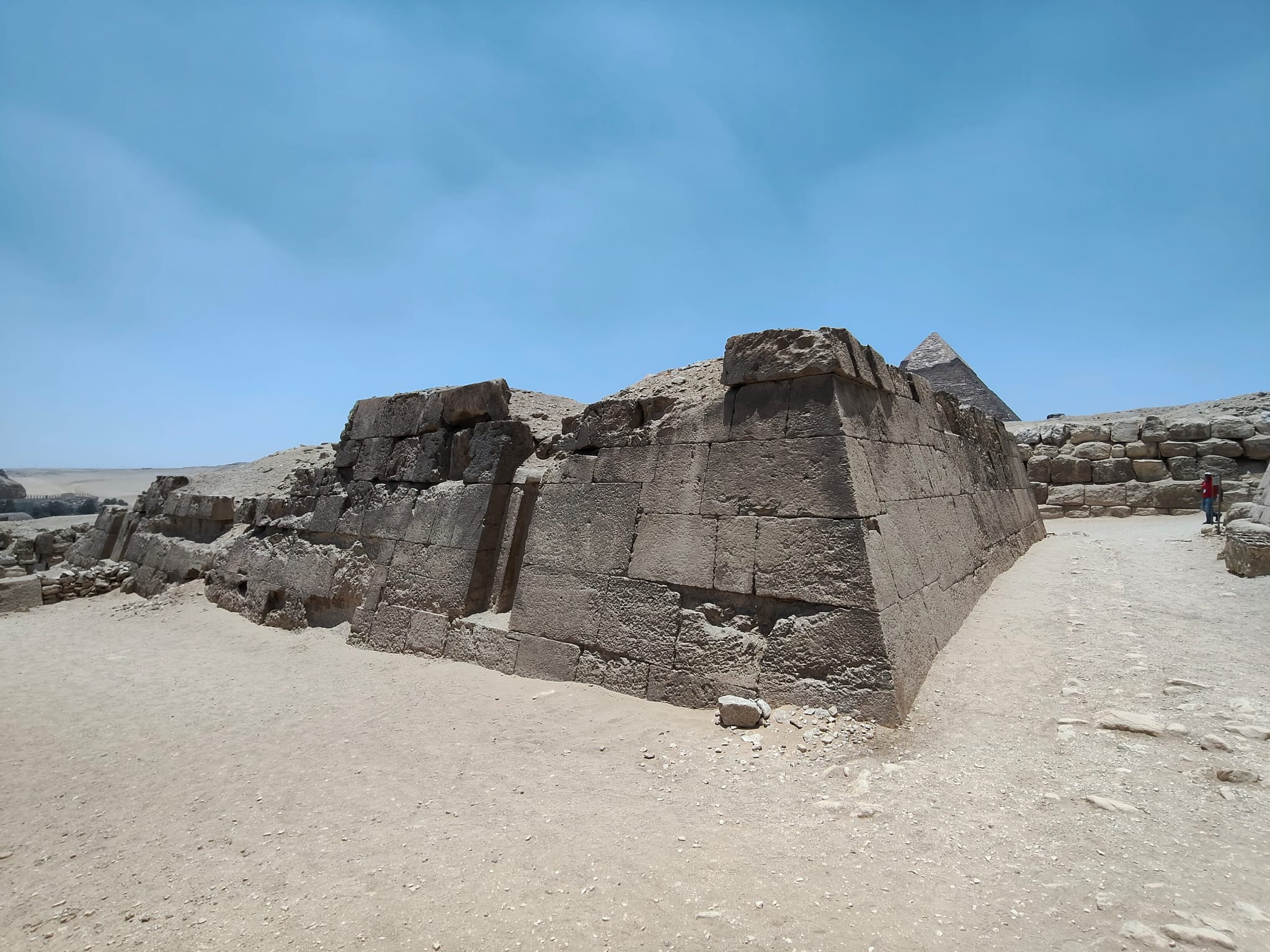
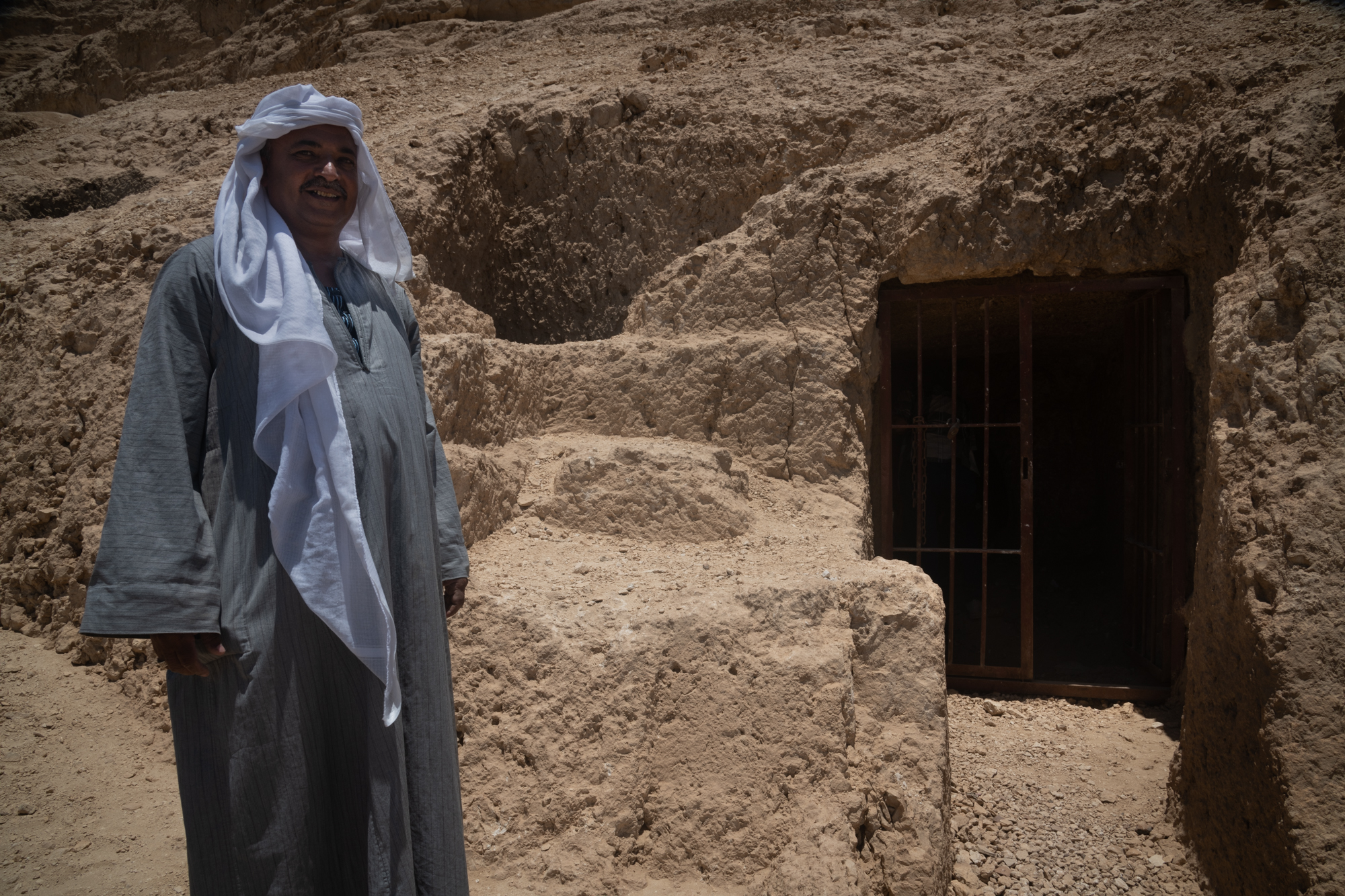
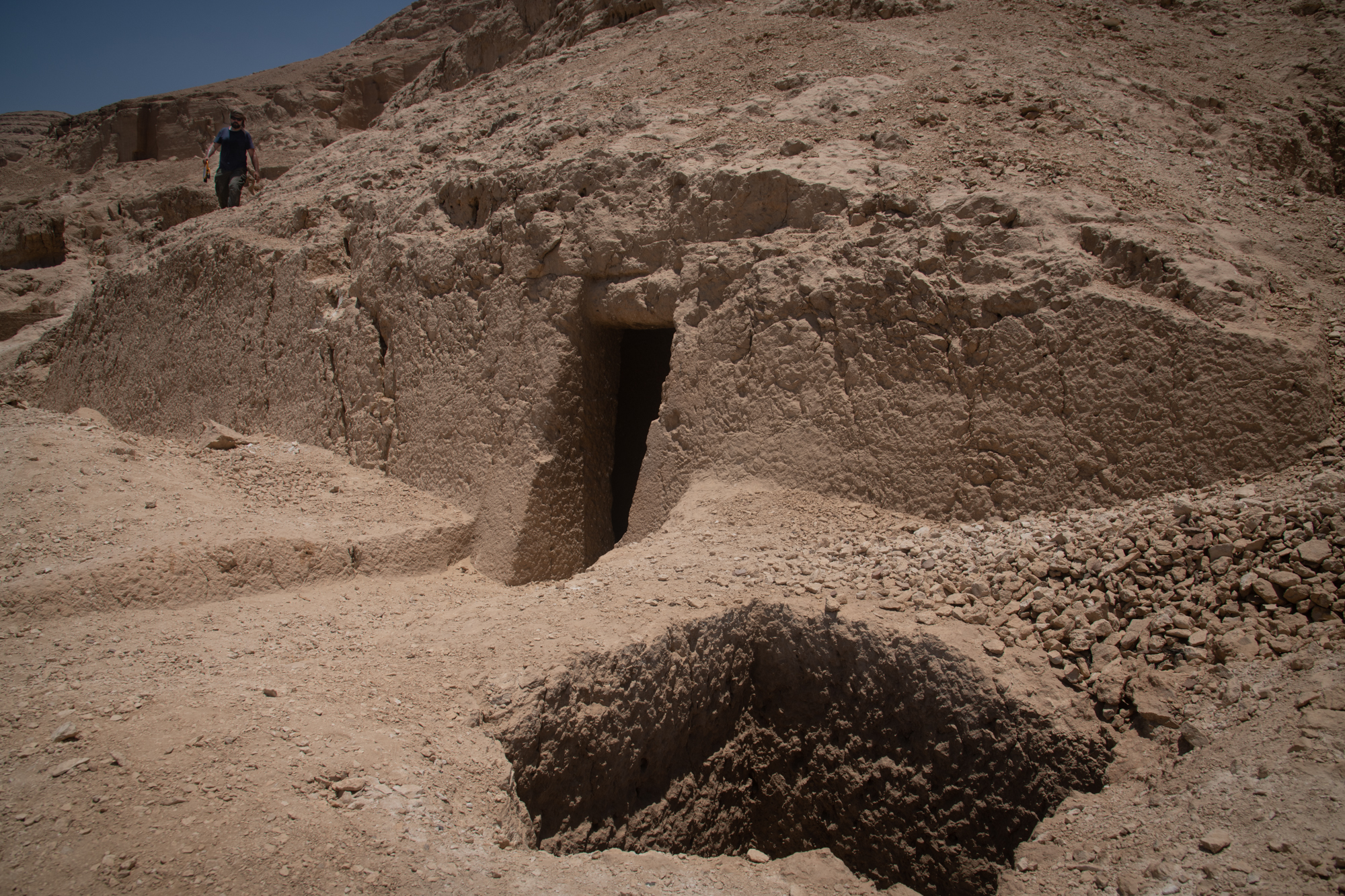
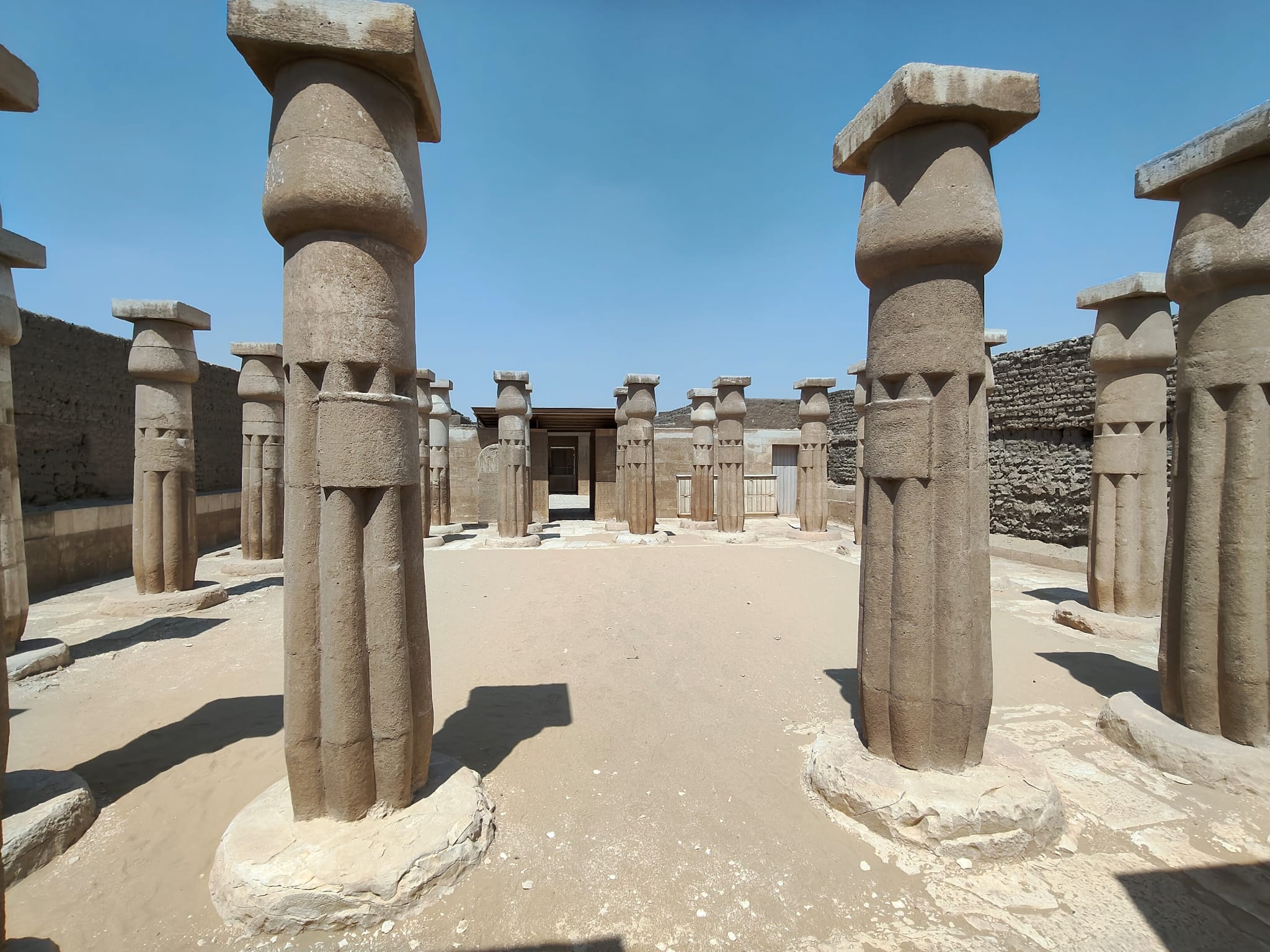
Today we wrapped up our fieldwork at the El-Hammamiya necropolis, a site of great importance for our project because it preserves an exceptional case that allows us to explore the relationships between patrons and their dependants.
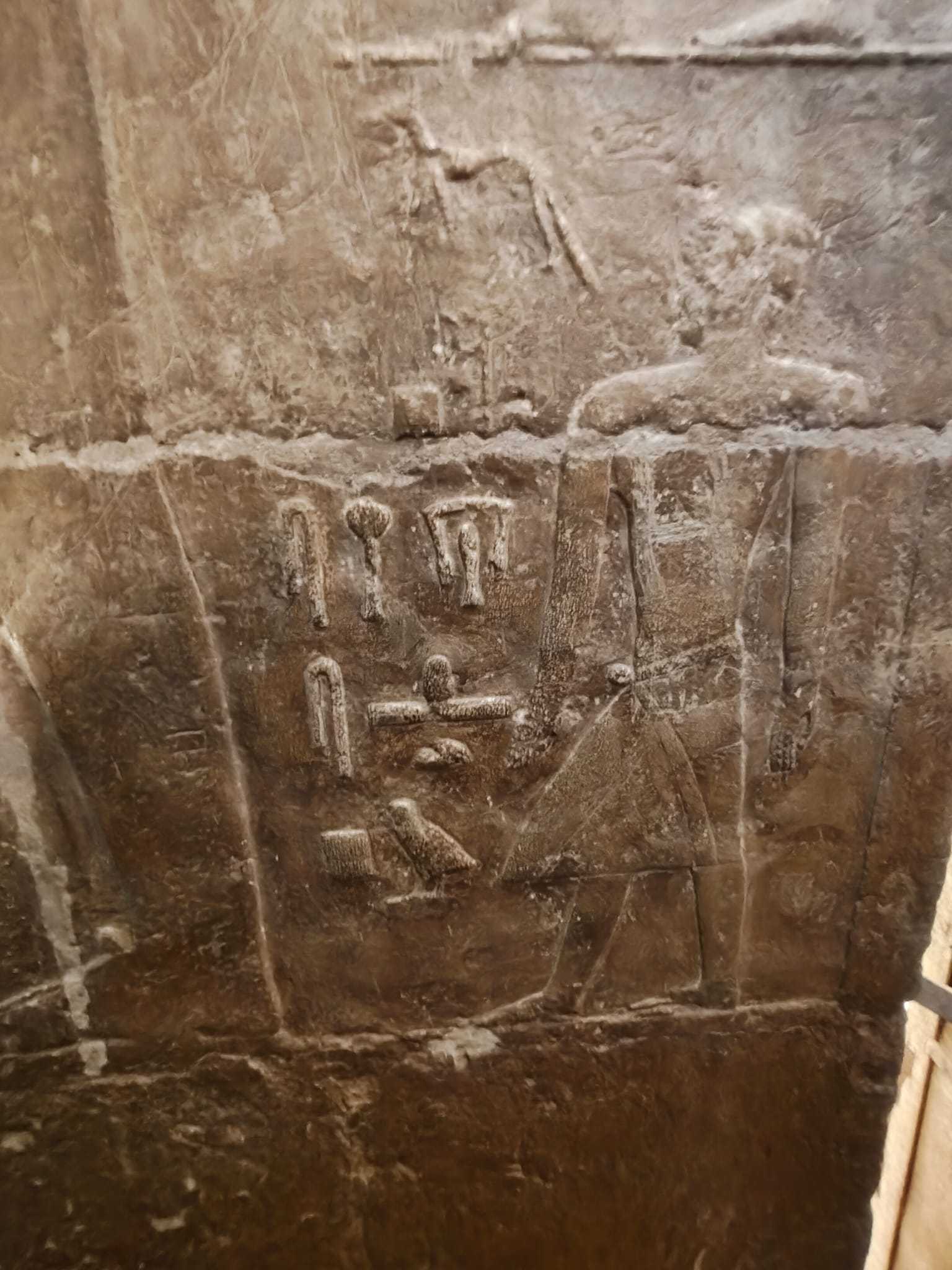
Among the principal tombs are those of the governors Kaihenet I and Kaihenet II. Beside them, although much more modest in scale, lies the tomb of Djefaided, the Overseer of the ka-servants, who served both nomarchs. How do we know this? Because he is depicted, together with his name and titles, in the tombs of both governors. This makes El-Hammamiya an exceptional case study for understanding relationships of patronage and dependency during the Old Kingdom.
However, the necropolis is much more than these three tombs. We were also able to visit and document a large number of mostly uninscribed tombs, which have helped us gain a better understanding of how Old Kingdom necropoleis were organised and how their funerary architecture was structured.
Moreover, as El-Hammamiya is contemporary with the necropoleis of Gebel el-Teir and Tehneh, it provides valuable points of comparison that enrich our interpretation of the evidence from these sites.
With this visit, our expedition comes to an end. Tomorrow we will head to Cairo, where we will complete the remaining administrative procedures before returning home. We leave with the satisfaction of a job well done, the feeling that we have learned a great deal, and hard drives full of data that will keep us busy as we continue our research.
Day 11. 28/06/2026. El-Hawawish
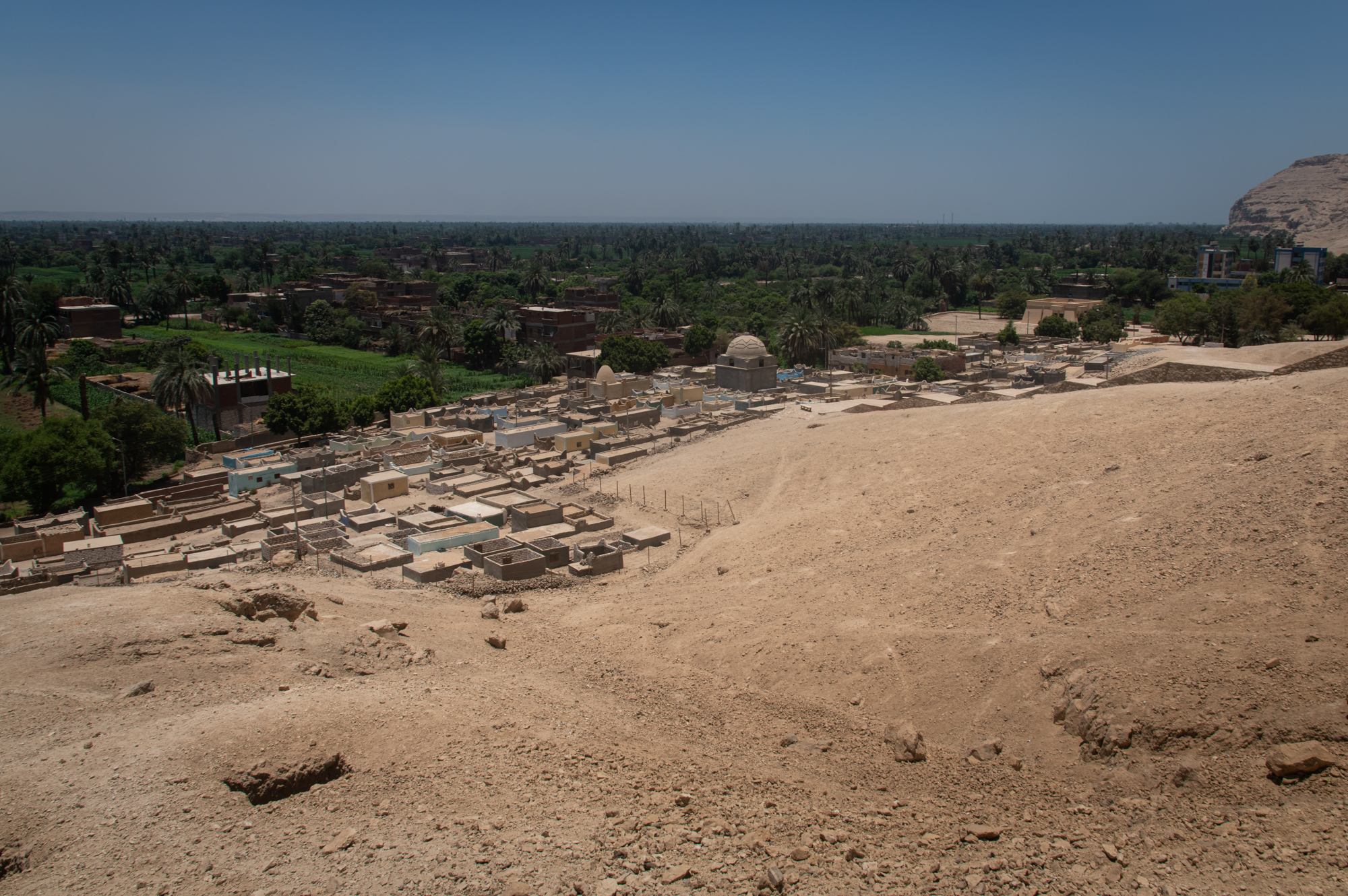
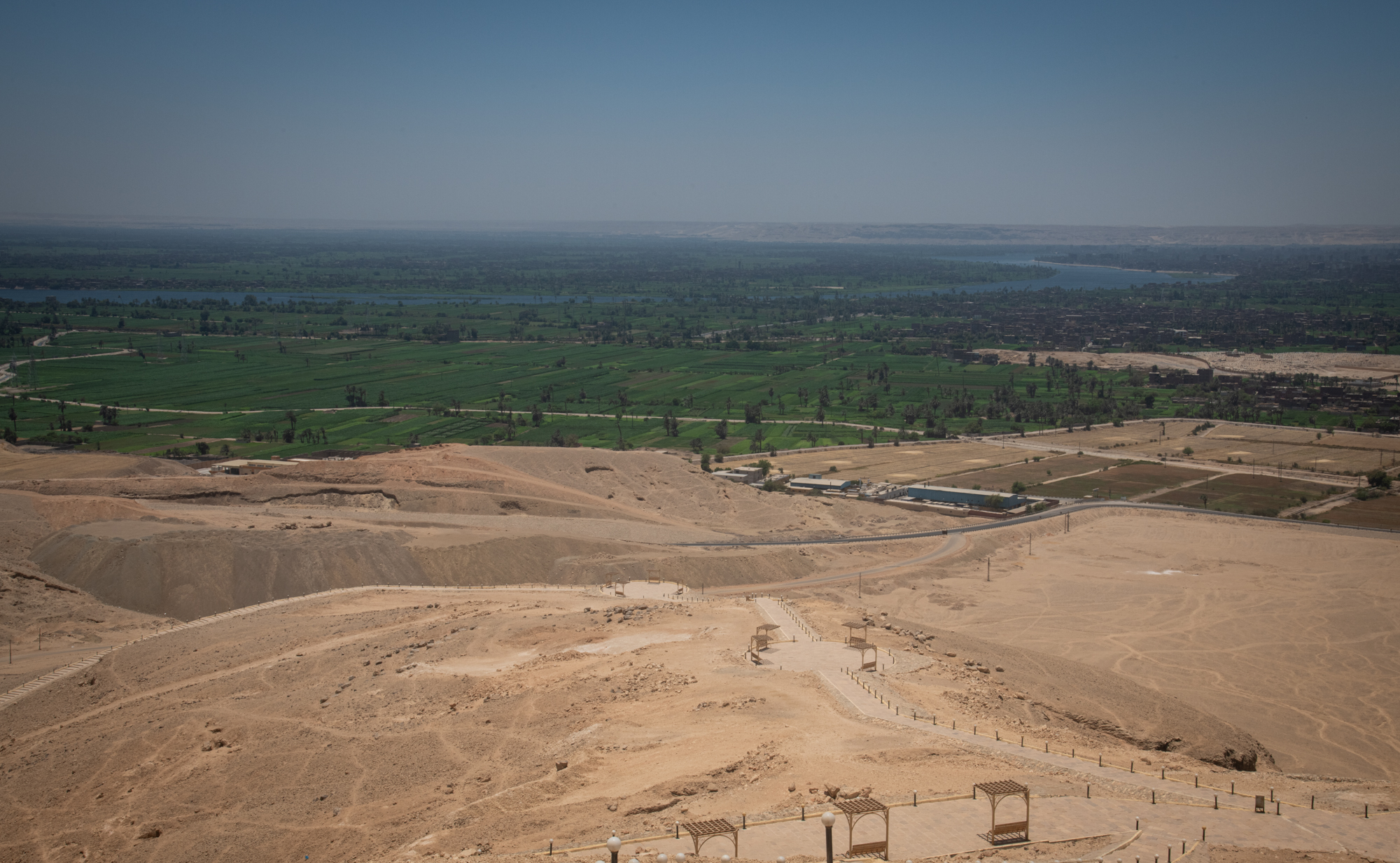
Today our work took us to one of the most spectacular provincial necropolises in Egypt: El-Hawawish, the burial ground of the governors of Akhmim during the Old Kingdom.
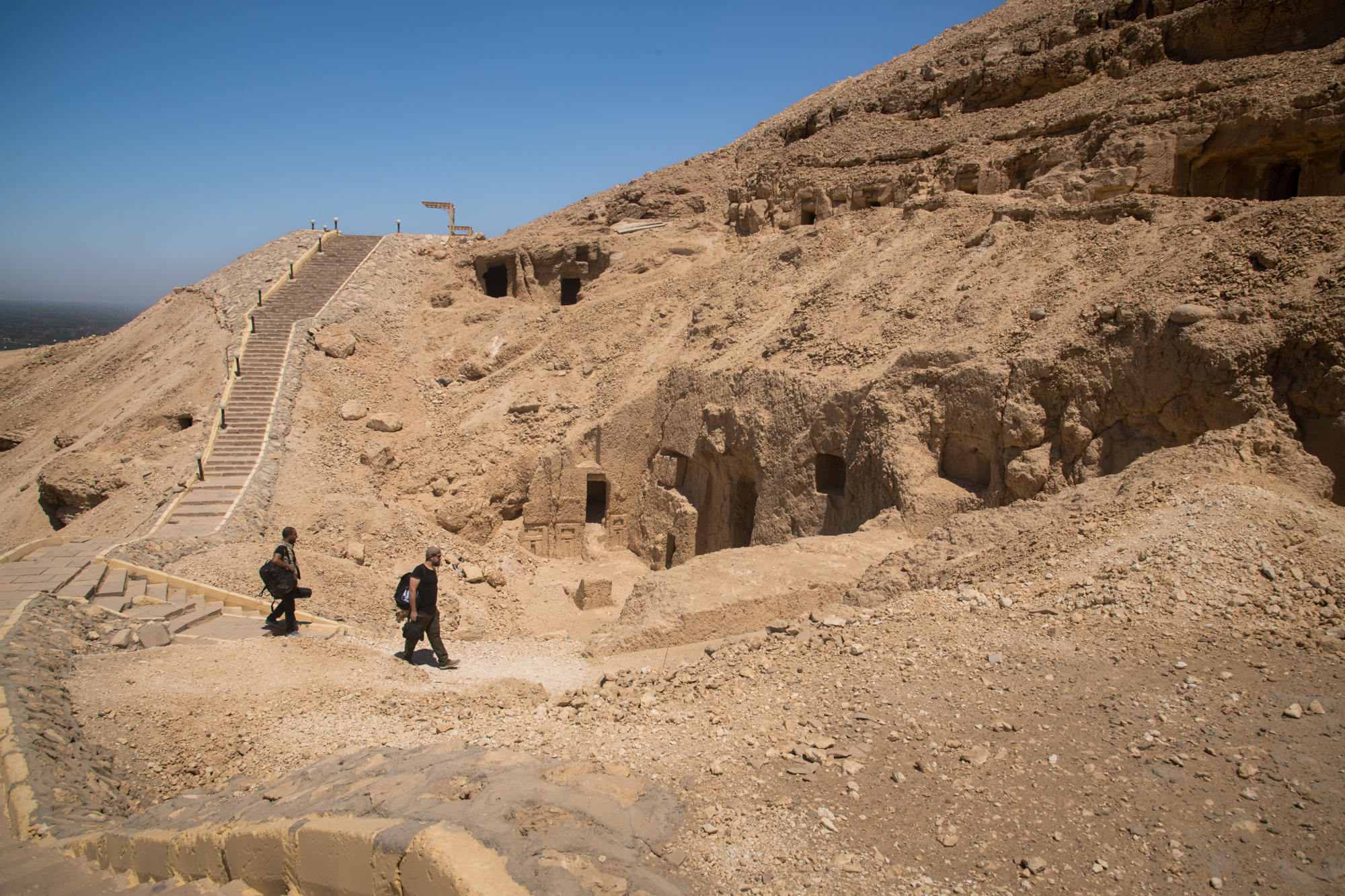
The day began with quite a challenge. The necropolis is carved high into the limestone cliffs overlooking the Nile Valley, and reaching the tombs meant climbing a seemingly endless staircase of more than 1,000 steps, carrying all of our equipment. It was certainly a demanding ascent, but the breathtaking views from the top made every step worthwhile.
Once there, we focused on documenting several carefully selected tombs. We recorded both their beautifully decorated interiors and the inscriptions that have survived, as well as their external layout, paying particular attention to the subsidiary tombs clustered around the courtyards of the great rock-cut tombs. These secondary burials most likely belonged to people closely associated with the governors' households, providing valuable evidence for the social relationships and networks of dependency that shaped provincial society during the Old Kingdom.
One of the main objectives of the day was Tomb M45a, belonging to Ifiiret, who probably served as the funerary priest of the governor Hemmin. The study of this tomb is especially important for understanding how mortuary cults were organised and maintained in the provincial necropolises of ancient Egypt.
Tomorrow we will head to Assiut for the final stage of our fieldwork: the necropolis of El-Hammamiya, where we will complete the last day of documentation for this season. We will then return to Cairo to finalise the reports that must be submitted to the Egyptian authorities before preparing for our journey home.
The expedition is now entering its final stretch!
Day 10. 27/06/2026. Gebel el-Teir, farewell
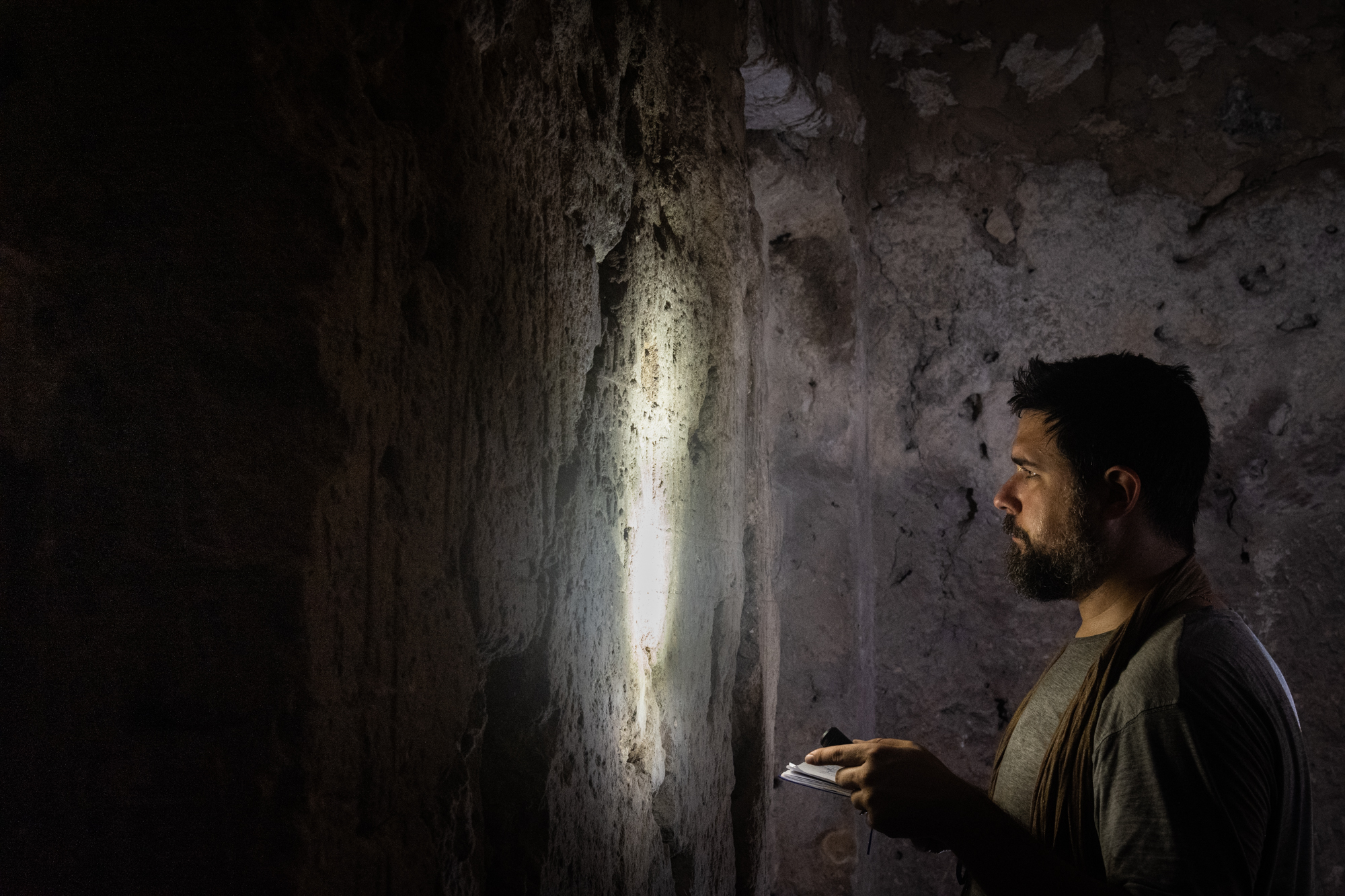
Today we said goodbye to Iimery and the necropolis of Gebel el-Teir. It has been an intense day, one of those days when time seems to fly by. Our goal was to complete as much of the epigraphic documentation of Iimery's mastaba as possible before leaving, and we worked tirelessly until we achieved it.
While Patri finished the photographic documentation, Raúl carefully checked each inscription to ensure that everything had been accurately recorded. We accomplished all the objectives we had set for ourselves, although we know that our work is far from over. Once we return to Spain, many hours of organizing, analyzing, and studying the material we have collected will still lie ahead.
Working in Egypt is about much more than studying ancient monuments. At a site like Gebel el-Teir, located in the heart of a living village and deeply connected to the daily lives of its people, it is impossible not to build meaningful relationships with the local community. Before long, you stop feeling like a visitor and begin to feel, even if only for a short time, like part of the community itself.
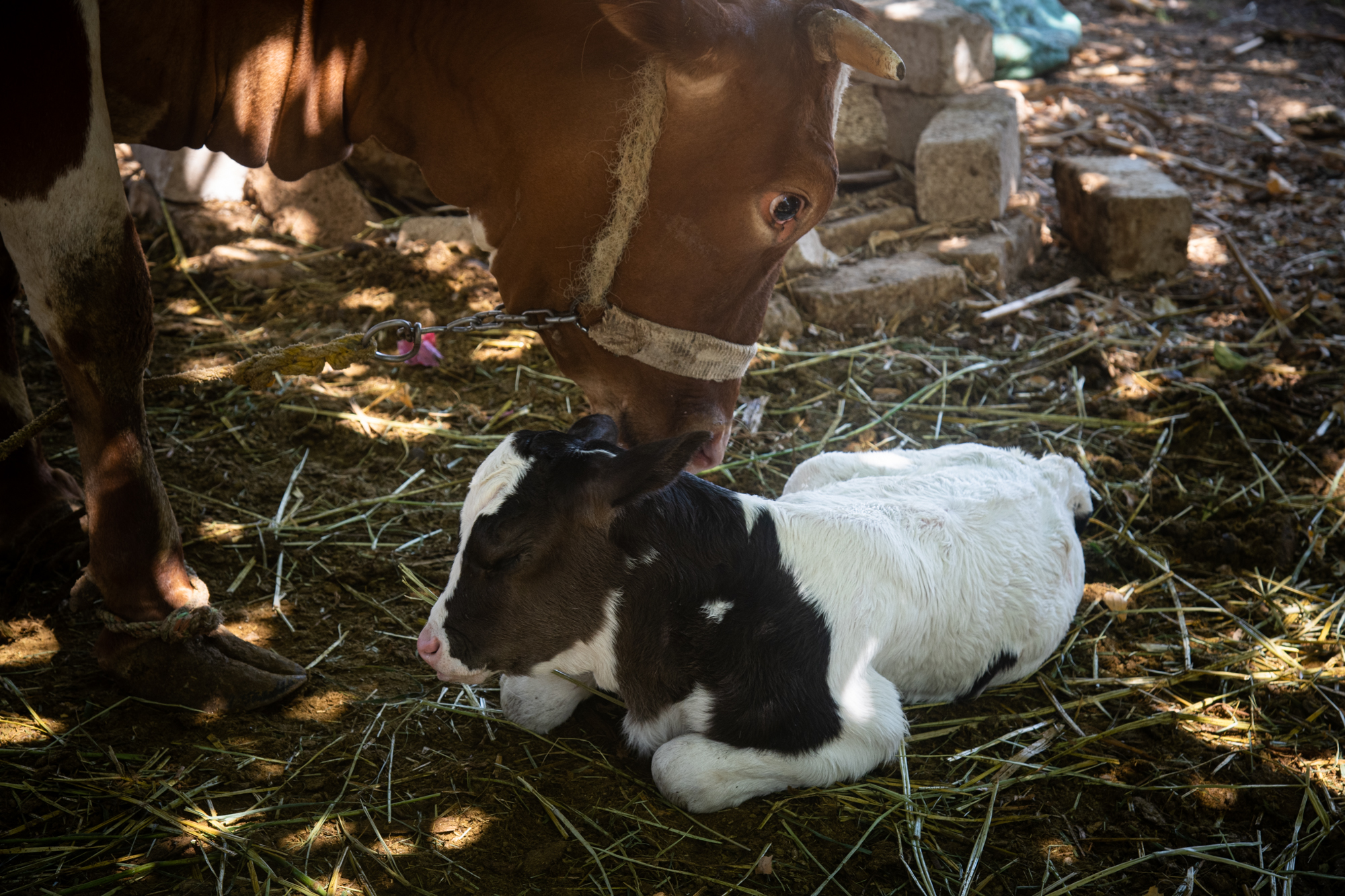
Today, as a farewell, Arabi and Saad wanted to share a very special moment with us: the birth of a calf. For them, it was an everyday event, but for those of us who live in large cities, it was a simple yet unforgettable experience. Moments like these remind us that an archaeological expedition is about much more than fieldwork, they are also about the people we meet and the memories we create together.
We leave Gebel el-Teir with the satisfaction of a job well done and the sadness of saying goodbye to so many people who welcomed us with such kindness. We hope to see them all again very soon.
Tomorrow, early in the morning, we will set off for Akhmim, where a new chapter of our work begins at the spectacular necropolis of El-Hawawish.
Day 9. 26/06/2026. Tehneh
Today our fieldwork took us to the Tehneh necropolis, better known as the Fraser Tombs, named after the Egyptologist George Willoughby Fraser, who first published this remarkable archaeological site at the beginning of the twentieth century.
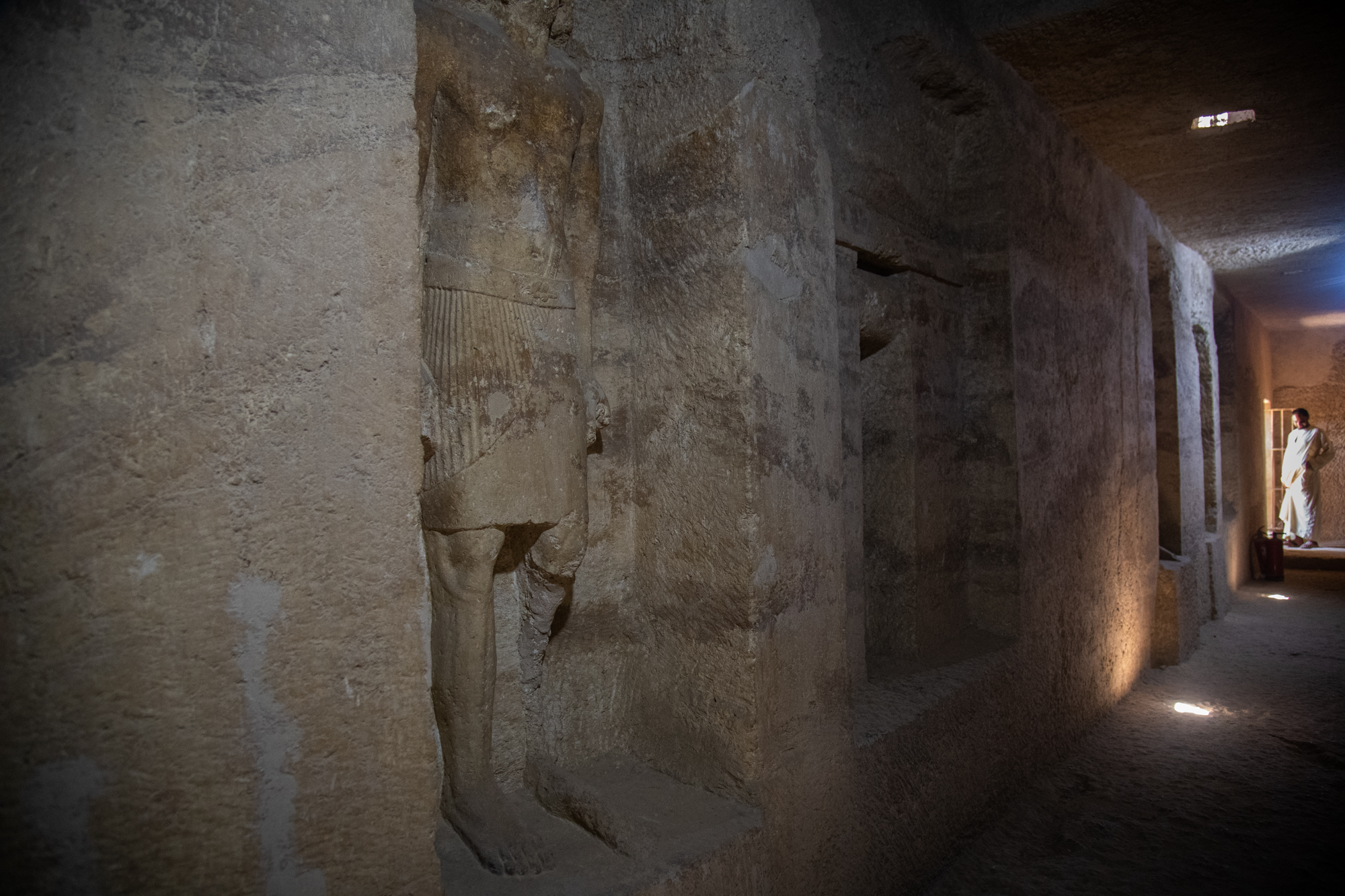
The necropolis contains several rock-cut mastabas belonging to the family of governors who administered this region during the Fifth Dynasty. Among them, the tomb of Nikaankh is one of the best preserved and most richly decorated monuments at the site.
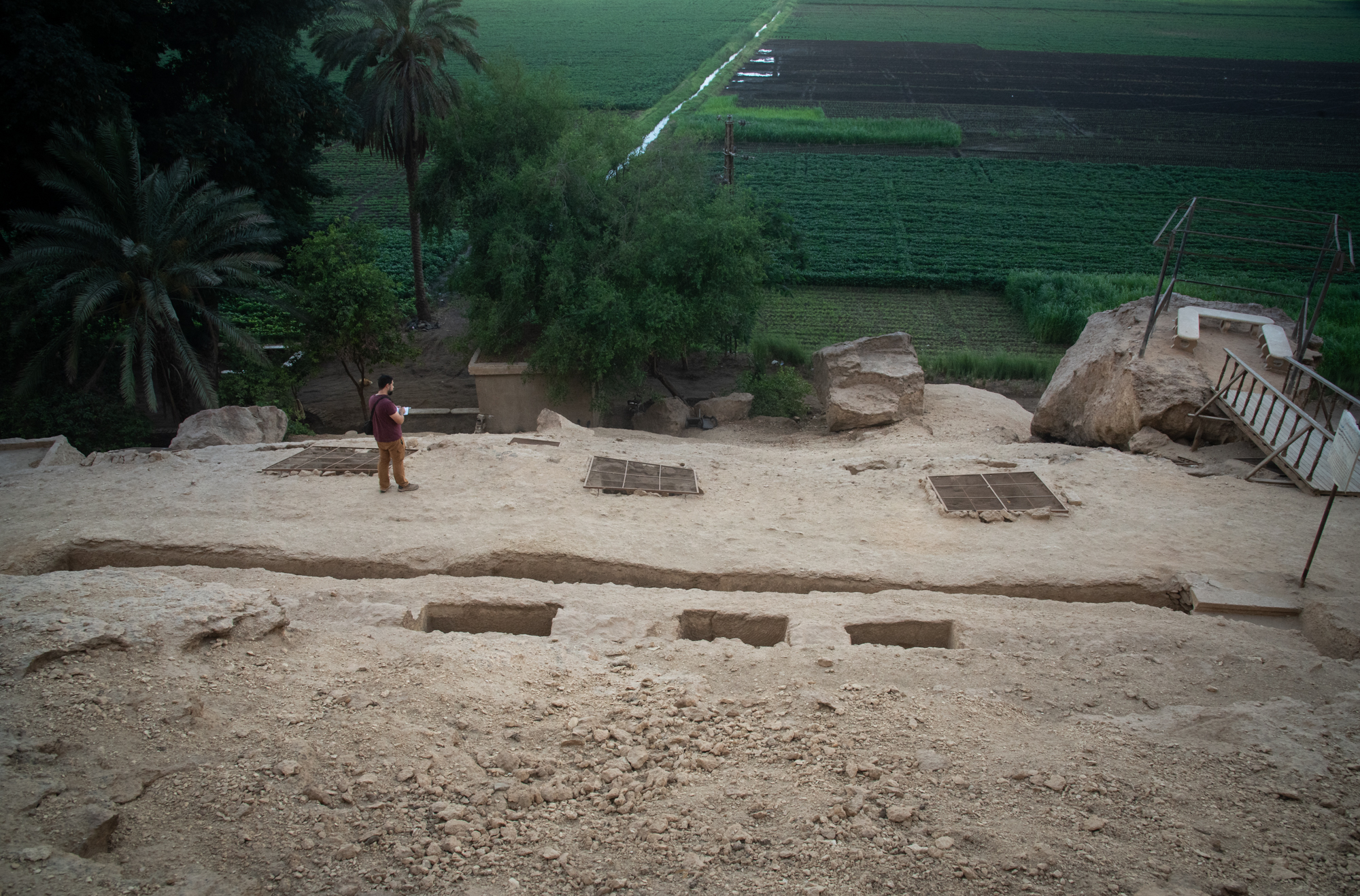
However, our work today was not limited to the impressive tombs of the elite. Surrounding them are dozens of burial shafts and smaller mastabas, most of them without inscriptions, belonging to individuals whose names have long since been lost. Although anonymous, the layout of these burials provides valuable evidence for reconstructing the social organisation of the cemetery and understanding the relationships between high officials and the people who depended upon them.
This funerary landscape is of particular importance to our project, which focuses on the study of these dependent individuals, who are often invisible in the written record but played a fundamental role in ancient Egyptian society.
Our visit to Tehneh has also provided an excellent point of comparison for interpreting the necropolis of Gebel el-Teir, where we observe a very similar pattern: clusters of burial shafts arranged around the principal mastaba of Iimery. These similarities help us to better understand the planning and development of both cemeteries during the Old Kingdom.
Tomorrow we return to Gebel el-Teir to complete the documentation of the site and continue uncovering the stories of the people who lived and were buried in the shadow of the great mastabas.
Day 8. 25/06/2026. Gebel el-Teir, at full steam!
Today our work focused on the tomb of Iimery, where we continued the systematic documentation of the decoration and texts preserved within this impressive mastaba.
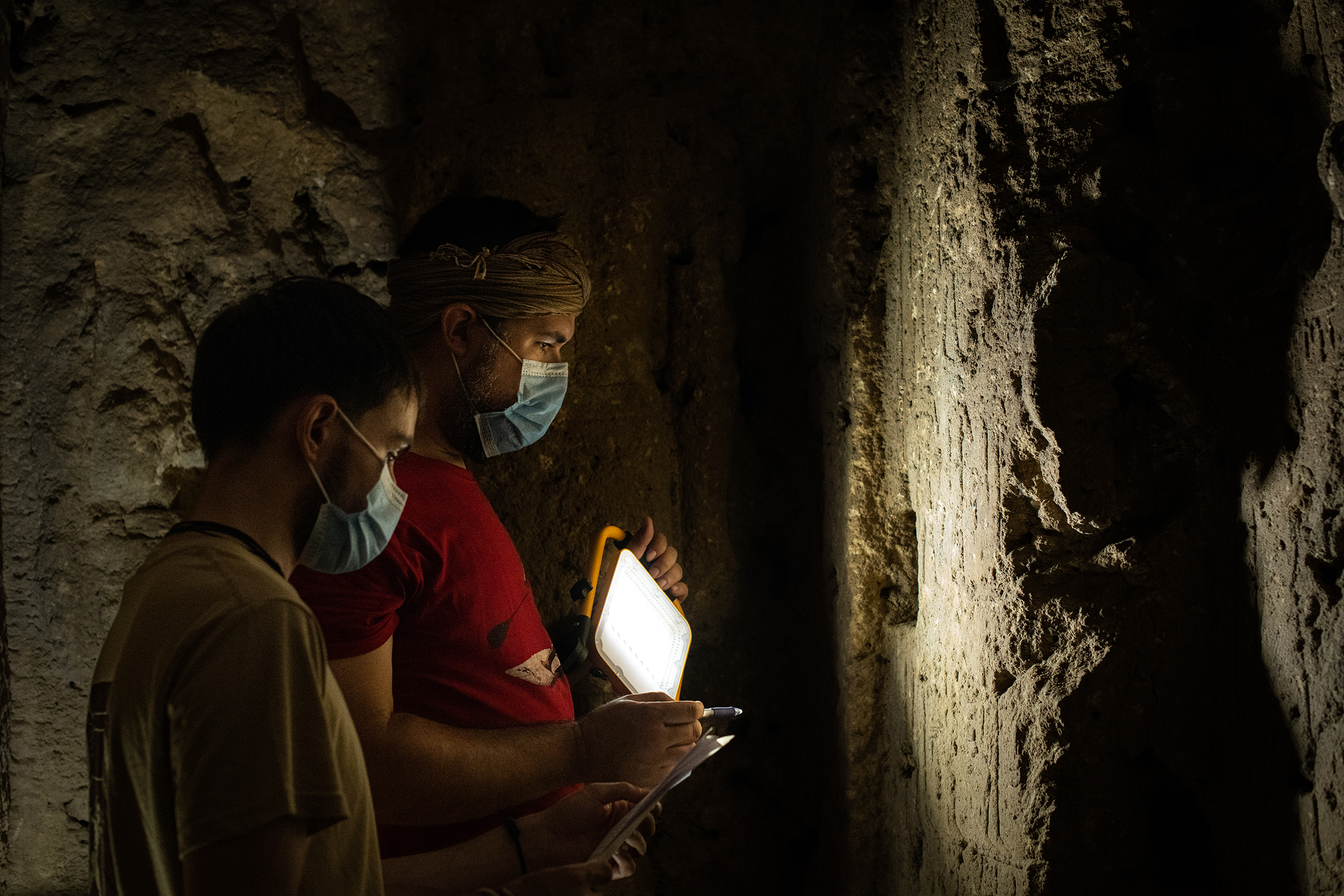
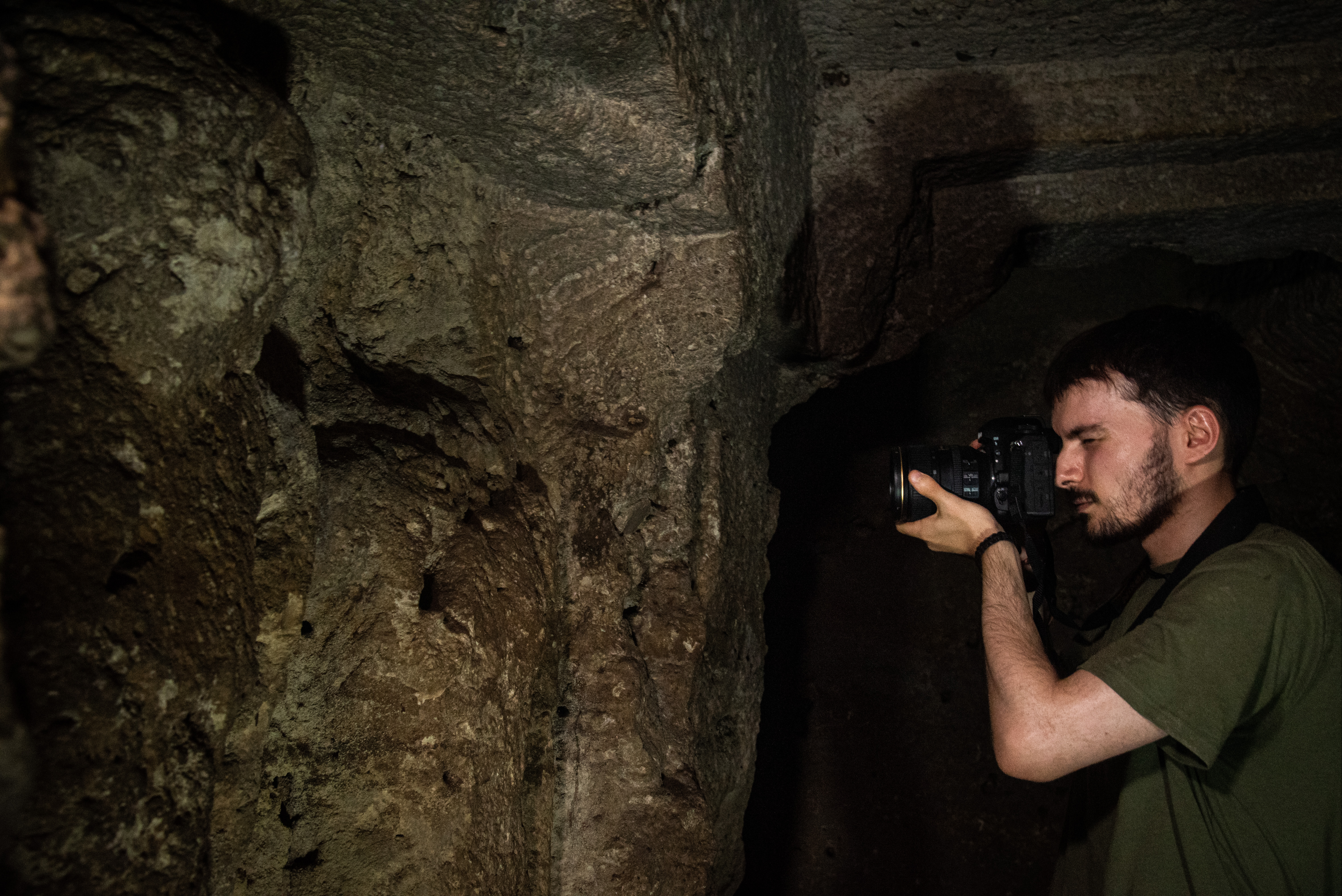
Our goal is to record every possible detail, from general photographs of the different chambers to high-resolution images of the reliefs and inscriptions. Because the tomb is decorated in low relief, lighting is crucial. By using raking light from different angles, we can reveal details that are invisible to the naked eye and ensure that no text or scene goes unnoticed. In this task, our photographer, Patricia Mora, brings her expertise to bear, producing the highest-quality images that will serve as the foundation for our digital epigraphy work.
We also devoted part of the day to comparing the copies of the texts published by Ahmed Kamal in 1903 with the current state of the tomb walls. As expected, more than a century has left its mark: some of the fragments documented at that time have deteriorated or disappeared. However, we also had some excellent news: we identified and documented new texts and scenes that had never previously been copied, thereby expanding the corpus of known Old Kingdom texts and iconography.
Tomorrow, we will briefly pause our work at Gebel el-Teir to visit the nearby necropolis of Tehneh. Its tombs, contemporary with that of Iimery, provide valuable parallels both in their architectural layout and in the style of their decoration, helping us to gain a deeper understanding of this fascinating funerary landscape of ancient Egypt.
Day 7. 24/06/2026. Gebel el-Teir, revving up!
Today marked our first day of fieldwork at the necropolis of Gebel el-Teir. After the preliminary visit we made yesterday, you can imagine how excited we were to begin this new phase of the mission.
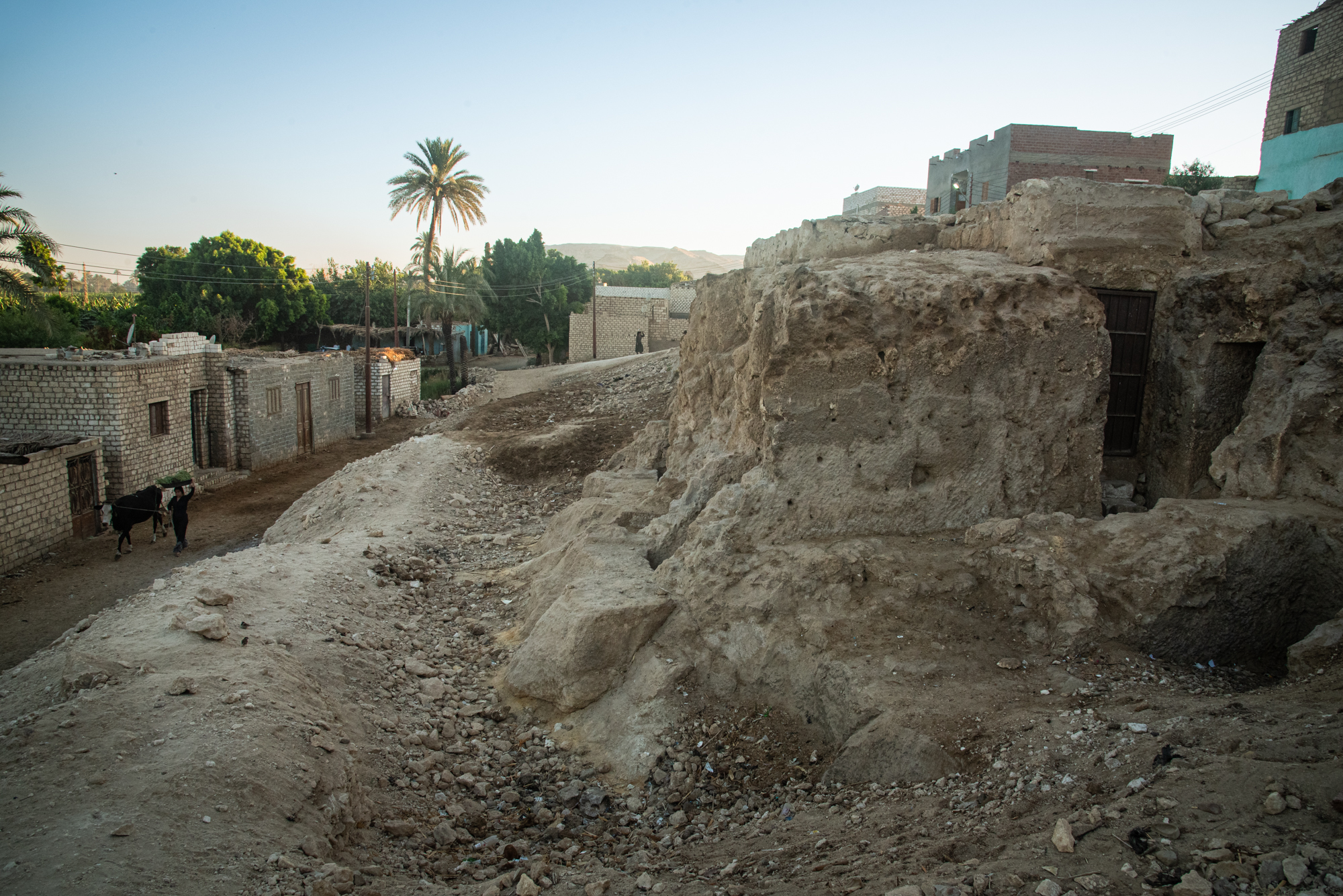
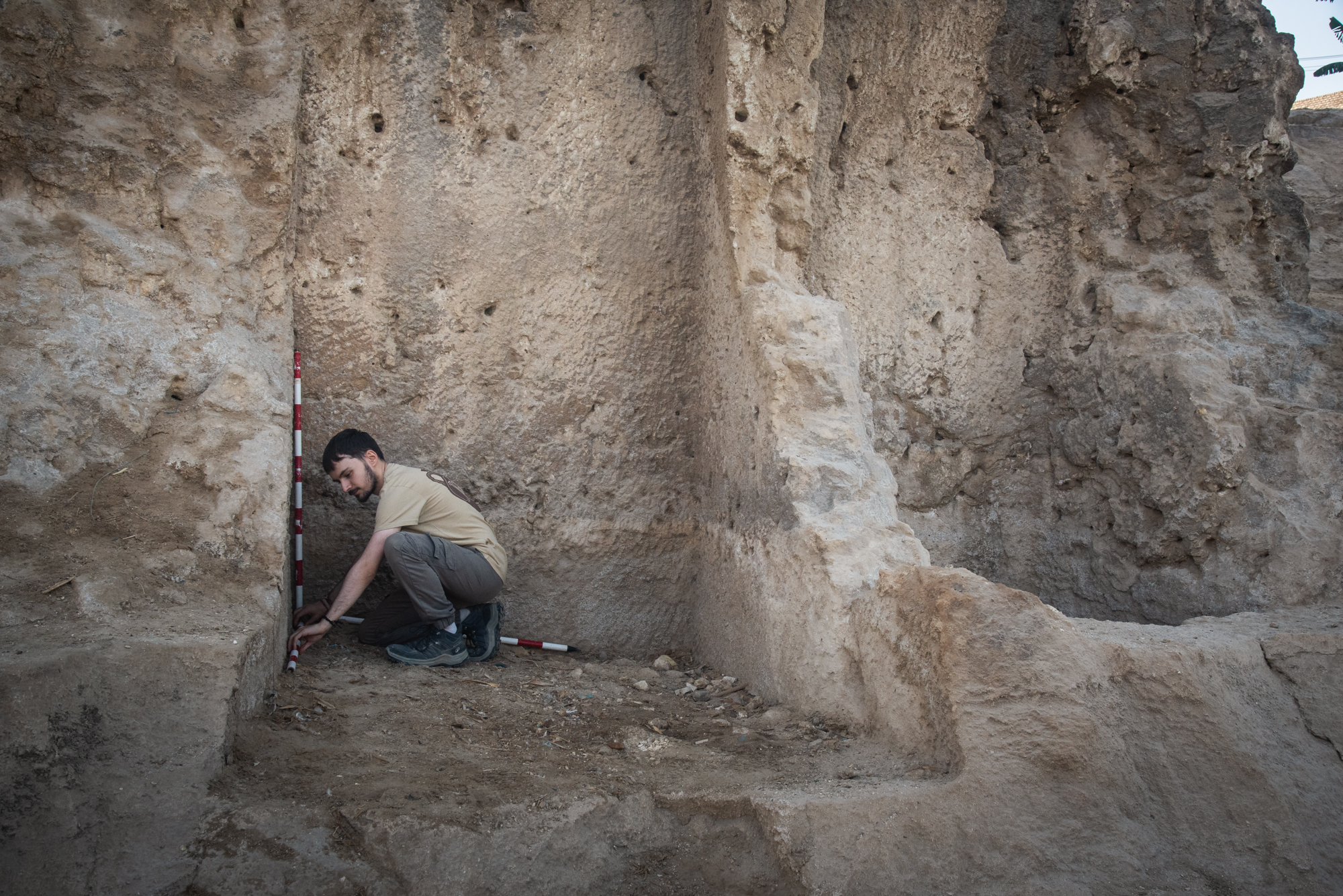
The day's activities focused on two main areas of work. First, we began the systematic documentation of the tomb of Iimery, taking general photographs of the different spaces that make up this important funerary monument. At the same time, we carried out a survey of the surrounding area, recording and mapping the various structures preserved within the site.
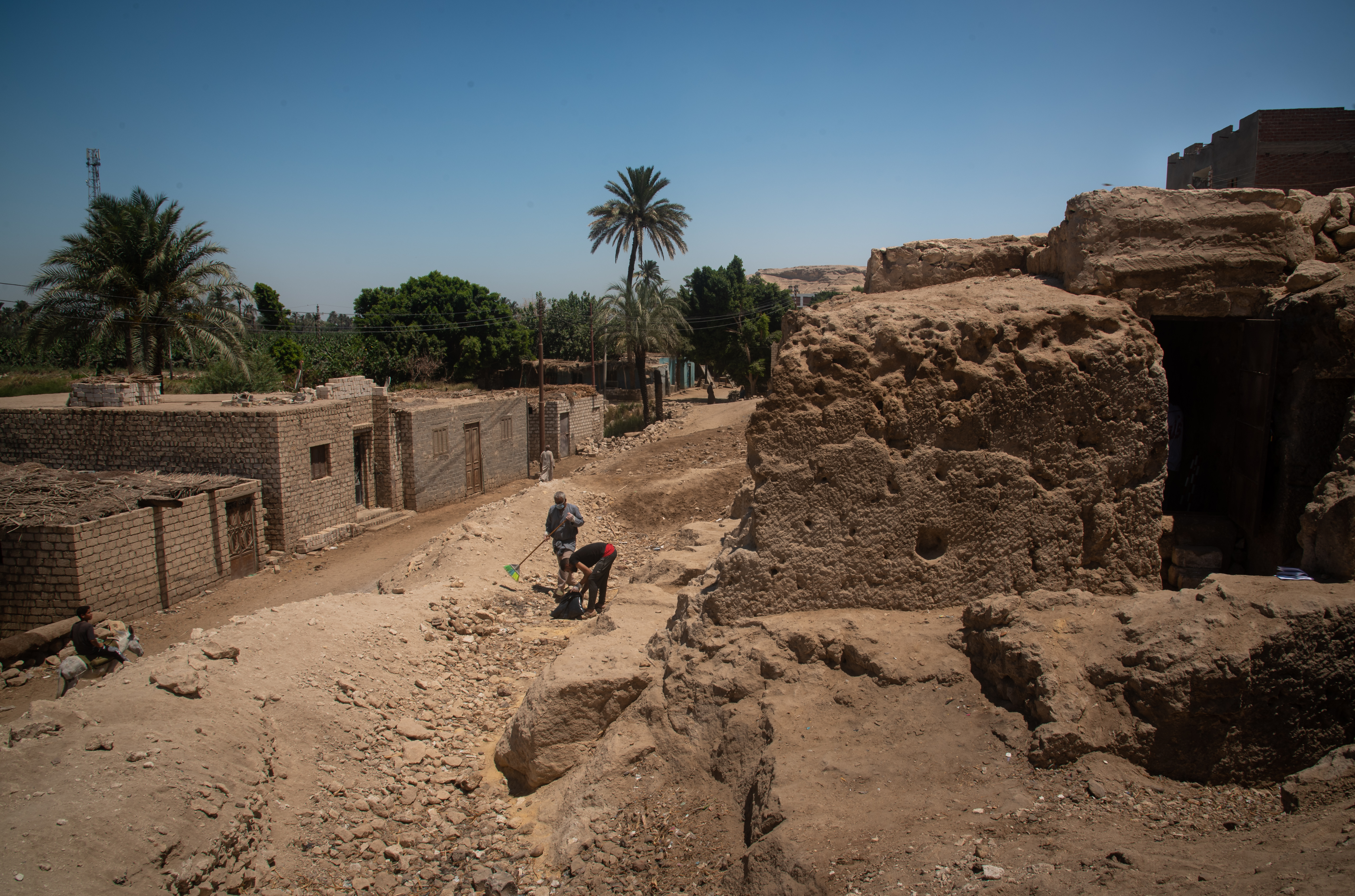
In addition to the rock-cut mastaba of Iimery, a high-ranking official of the Fifth Dynasty, the necropolis also contains several uninscribed tombs and around ten more modest burials. In most cases, these consist of funerary shafts leading to a simple burial chamber cut into the bedrock. Over the coming days, we will be documenting all these structures in detail, many of which remain virtually unknown to scholarship.
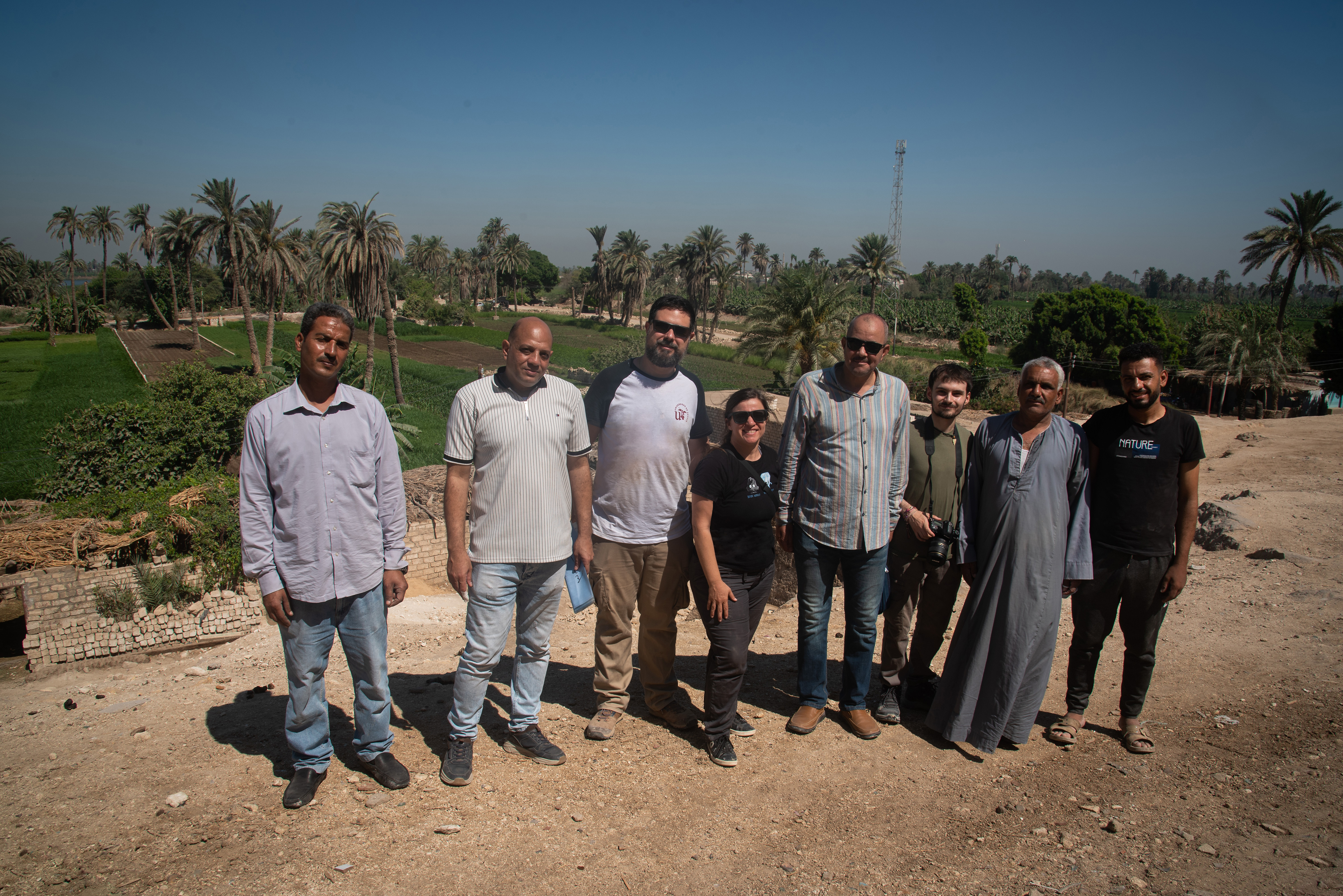
The day also gave us the opportunity to welcome a visit from the Chief Inspector of Gebel el-Teir, Omran Atana, who came to the site to oversee the progress of the work and ensure that we had everything necessary to carry out our tasks under the best possible conditions.
Collaboration with our Egyptian colleagues is essential to the success of the mission. We would like to express our sincere gratitude to Omran Atana, to our inspector Gamal Khamis, and also to Saad and Madjid, whose assistance has been invaluable in preparing the working area by removing the dirt and debris that had accumulated during the years in which the site remained closed.
This is only the beginning of a campaign that promises to provide valuable new information about a little-studied necropolis and the communities that lived and were buried in this part of Middle Egypt during the Old Kingdom.
Day 6. 23/06/2026. Gebel el-Teir, let's start!
Today has been an exciting day for our team!
The day started very early. At 5:30 a.m., we left Cairo and headed to Minya, where an intensive fieldwork season awaits us at the necropolises of Gebel el-Teir and Tehneh.
Our first stop was the local office of the Antiquities Service, where we had the honour of meeting Dr. Ahmed Fathy, General Manager of the area, to coordinate the procedures and organisation of the work we will be carrying out over the coming days. We would like to express our sincere gratitude for his warm welcome, kindness, and willingness to facilitate our work. We would also like to thank Mr. Wael Soleiman for all his assistance with the administrative procedures and the logistical organisation of the mission.
We then met with the Director of the North Minya Area, Mr. Mahmoud Mandarawy; the Chief Inspector of Gebel el-Teir, Mr. Omram Atana; and the Chief Inspector of Tehneh, Mr. Mikheimar Fathy. We also met Mr. Gamal Mohamed Khamis, who will serve as our inspector and will accompany and advise us throughout our work in the region.
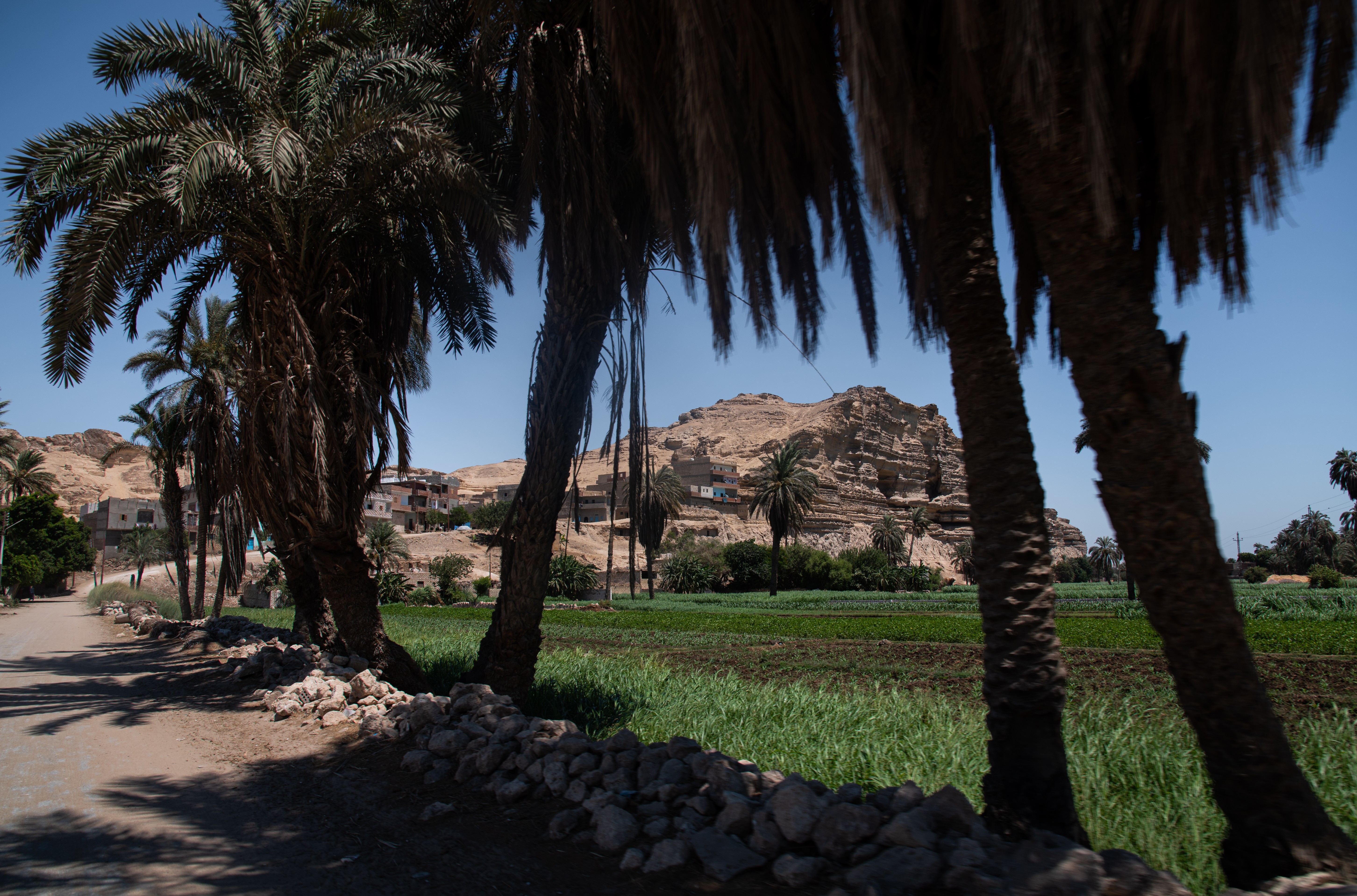
With all the paperwork completed, we finally headed to Gebel el-Teir. The excitement was immense: after months of preparation, the moment had arrived to visit first-hand the tombs where we will be working. During this initial visit, we explored several of the tombs at the site, among which the impressive rock-cut mastaba of Iimery stands out as one of the main focuses of our research in the coming days.
This is only the beginning. We will soon be sharing more details about this fascinating site and the work we are carrying out there. Stay tuned and join us on this archaeological adventure!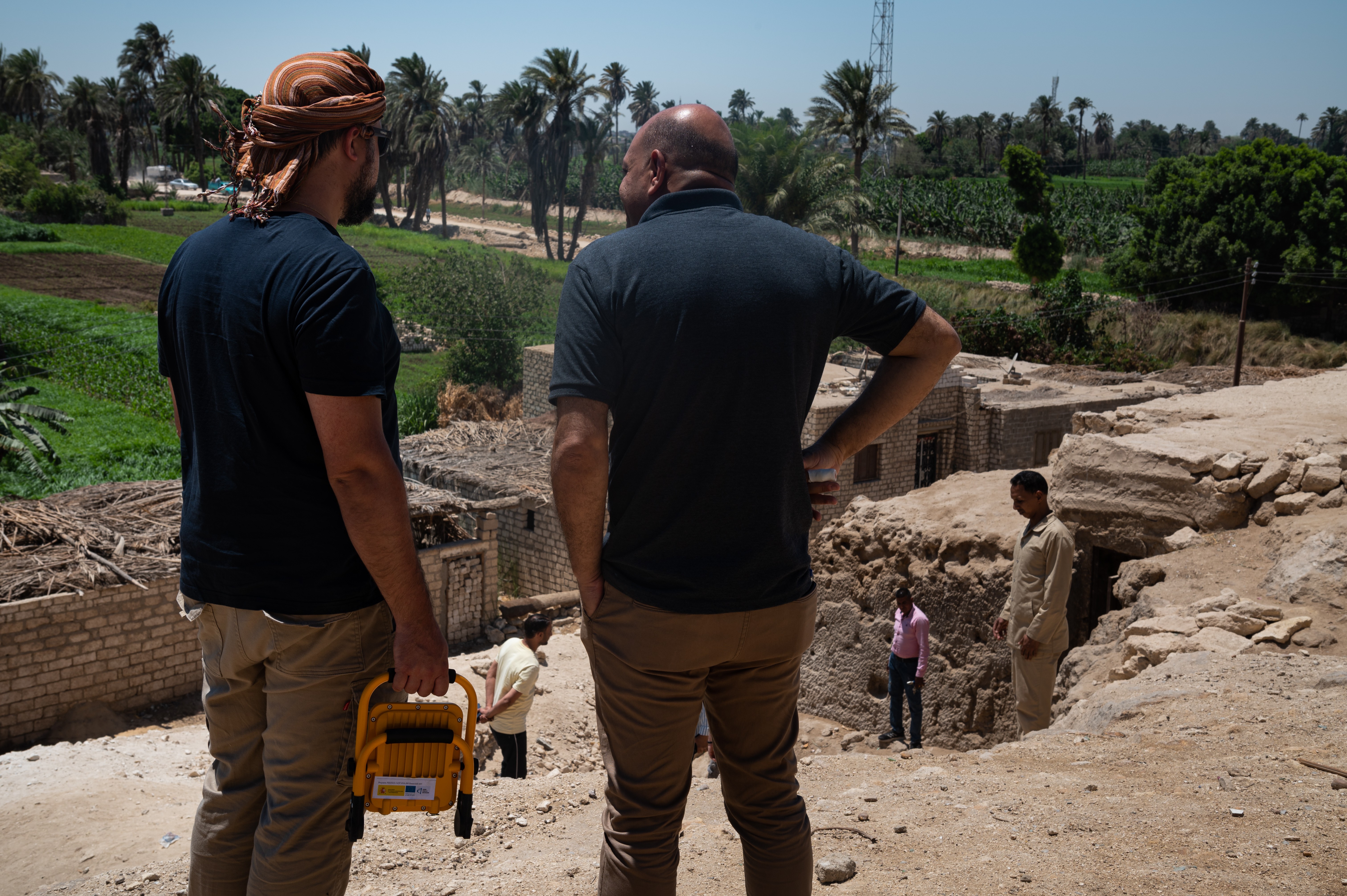
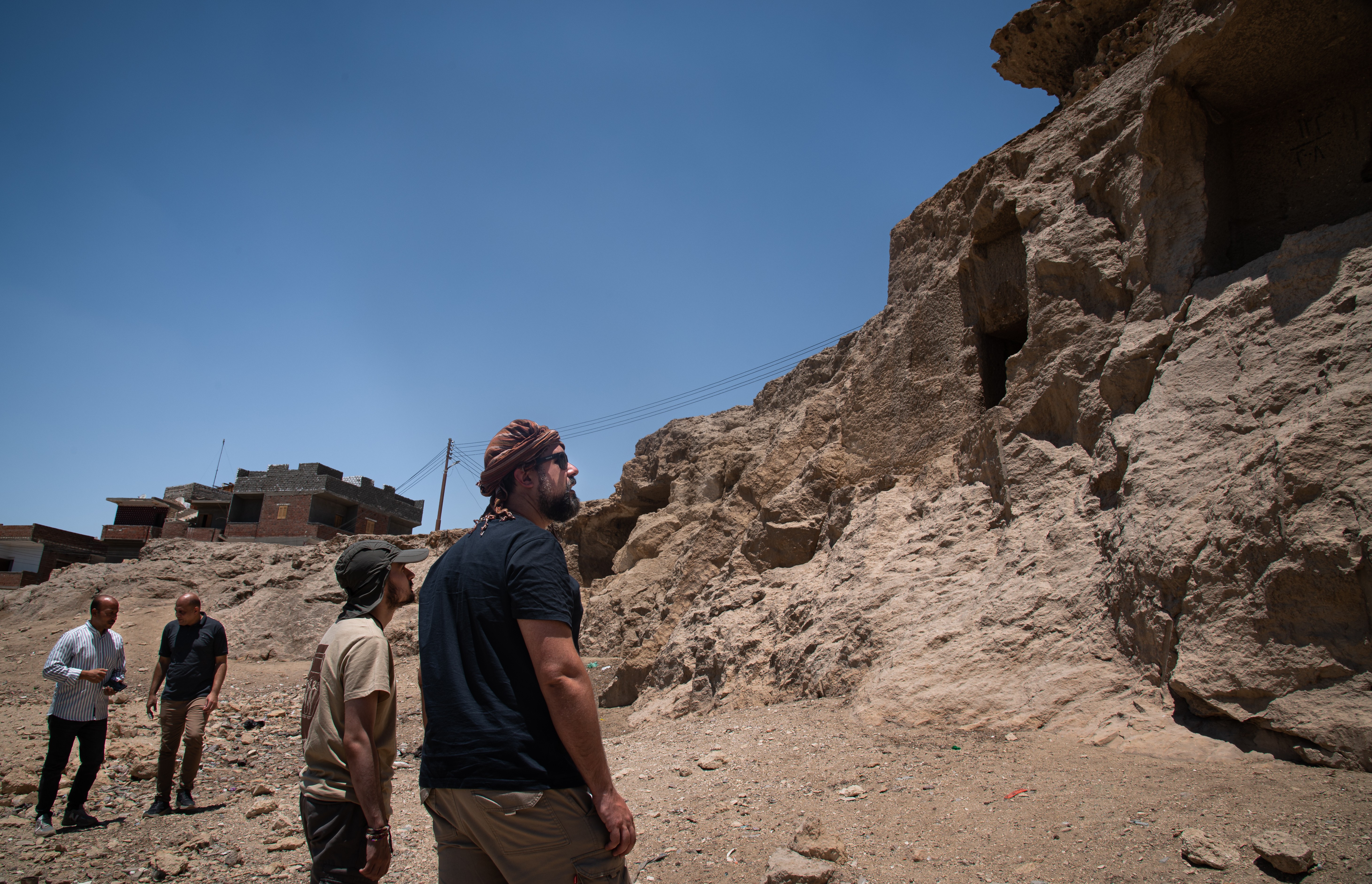
Day 5. 22/06/2026. Permits and preparatives
Our first task today took us to the offices of the Egyptian Ministry of Tourism and Antiquities, located on the Giza Plateau, just a short distance from the pyramids. There, we completed all the necessary paperwork and officially received the permits that will allow us to begin our work tomorrow!
We would like to express our sincere gratitude to the Supreme Council of Antiquities for authorising the work of the Invisible Networks Project and the University of Seville mission in the necropoleis of Gebel El-Teir, Tehneh, El-Hammamiya and El-Hawawish. At these sites, we will be visiting several monuments of great importance to the objectives of our project, and we look forward to sharing much more about them with you over the coming days.
We would also like to extend our thanks to Dr Hany El-Tayeb and his entire team for their support, professionalism and kindness throughout the permit application and approval process.
The rest of the day has been devoted to final preparations at the hotel to ensure everything is ready for tomorrow’s journey from Cairo to Minya. Once there, we will complete the necessary formalities at the local office and finally begin our fieldwork.
Our excitement and anticipation could not be greater!
Today, we leave you with a single photograph: Raúl and Iker, smiling as they hold the freshly signed permits that mark the beginning of this new adventure.

Day 4. 21/06/2026. SAQQARA
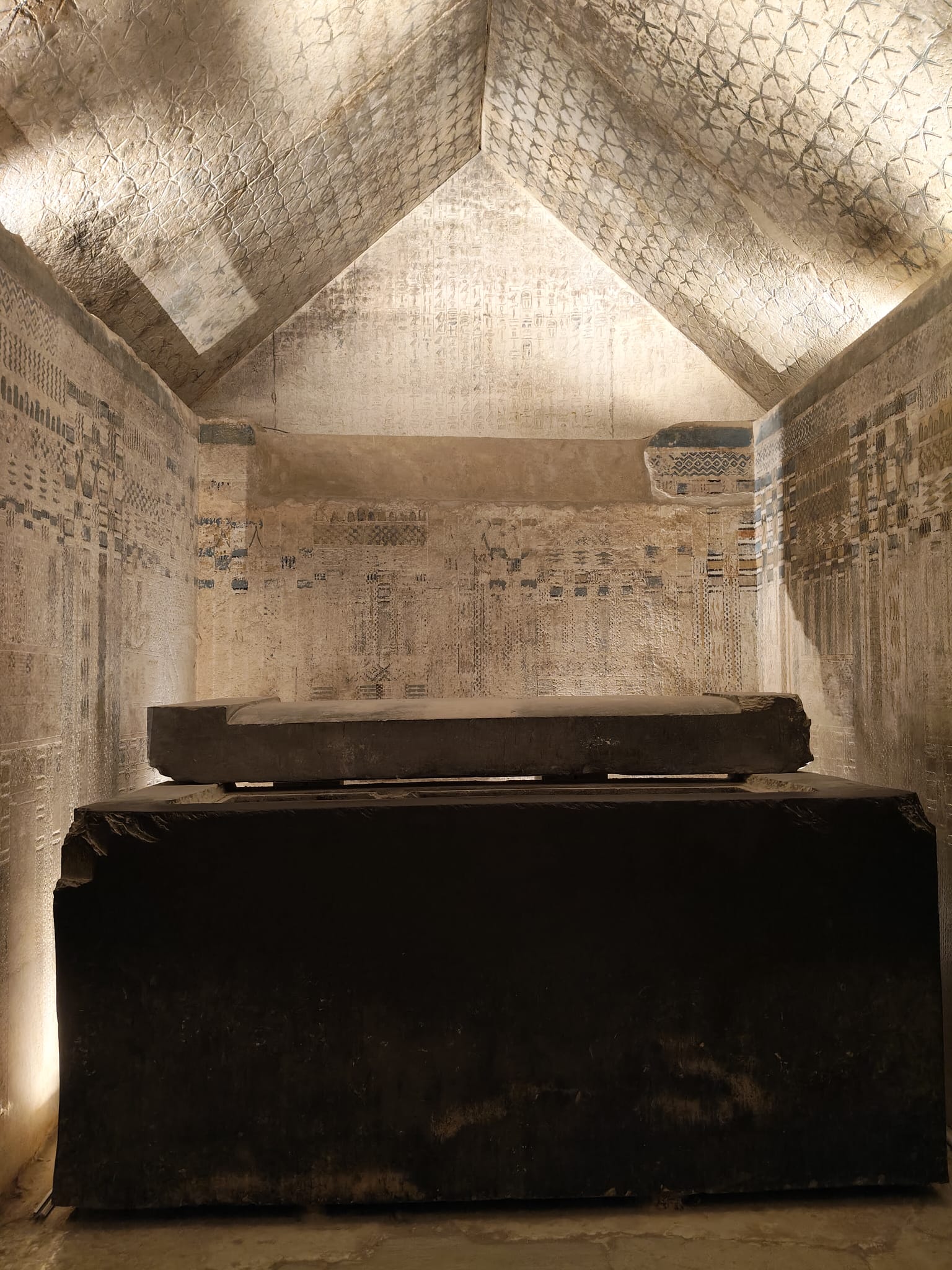
Today we returned to Saqqara, focusing our work on the area surrounding the pyramid of Unas. As expected, we visited the pyramid of the last king of the Fifth Dynasty, whose walls preserve the famous Pyramid Texts, the oldest known corpus of funerary inscriptions, first attested in this very monument.
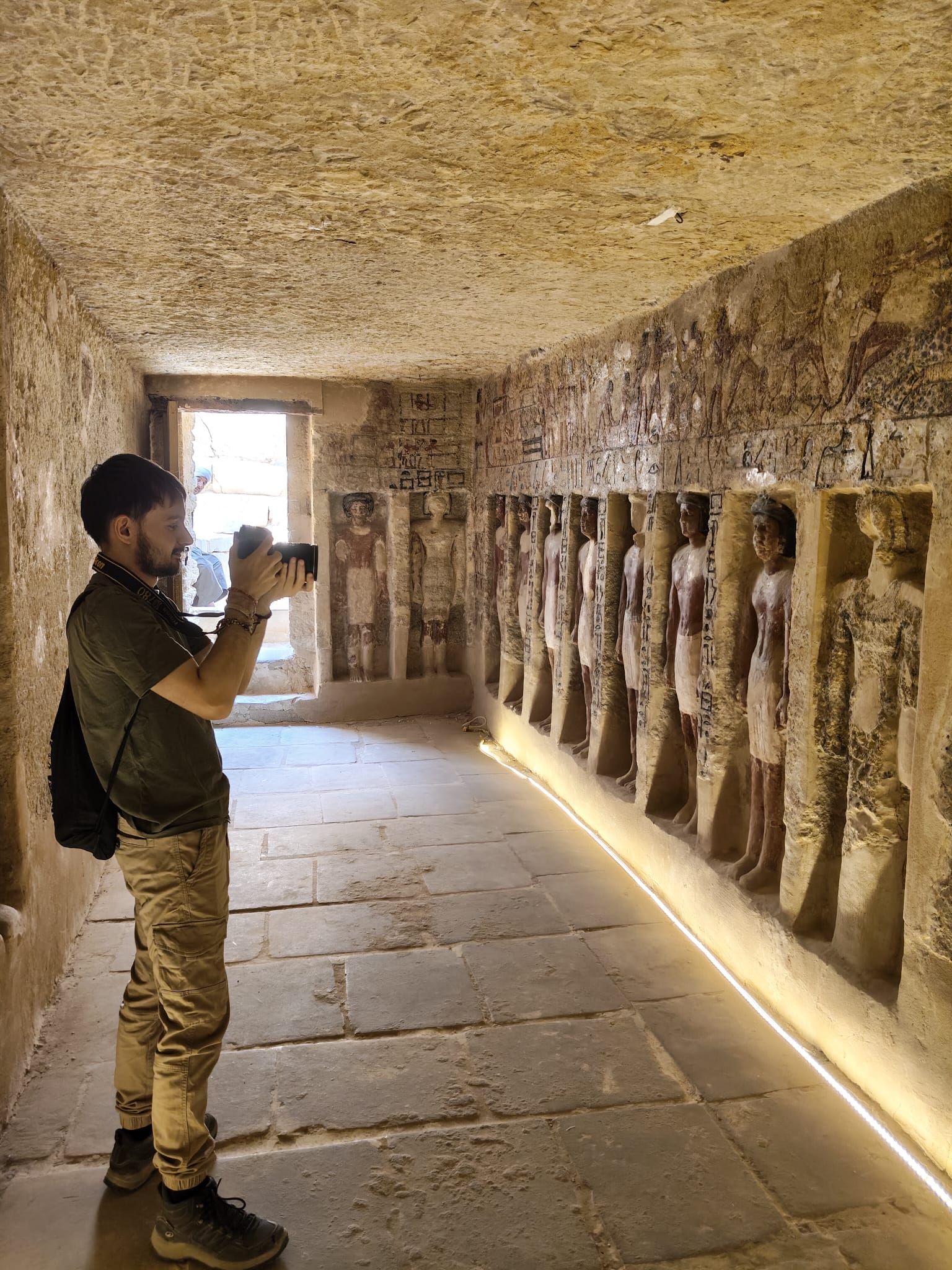
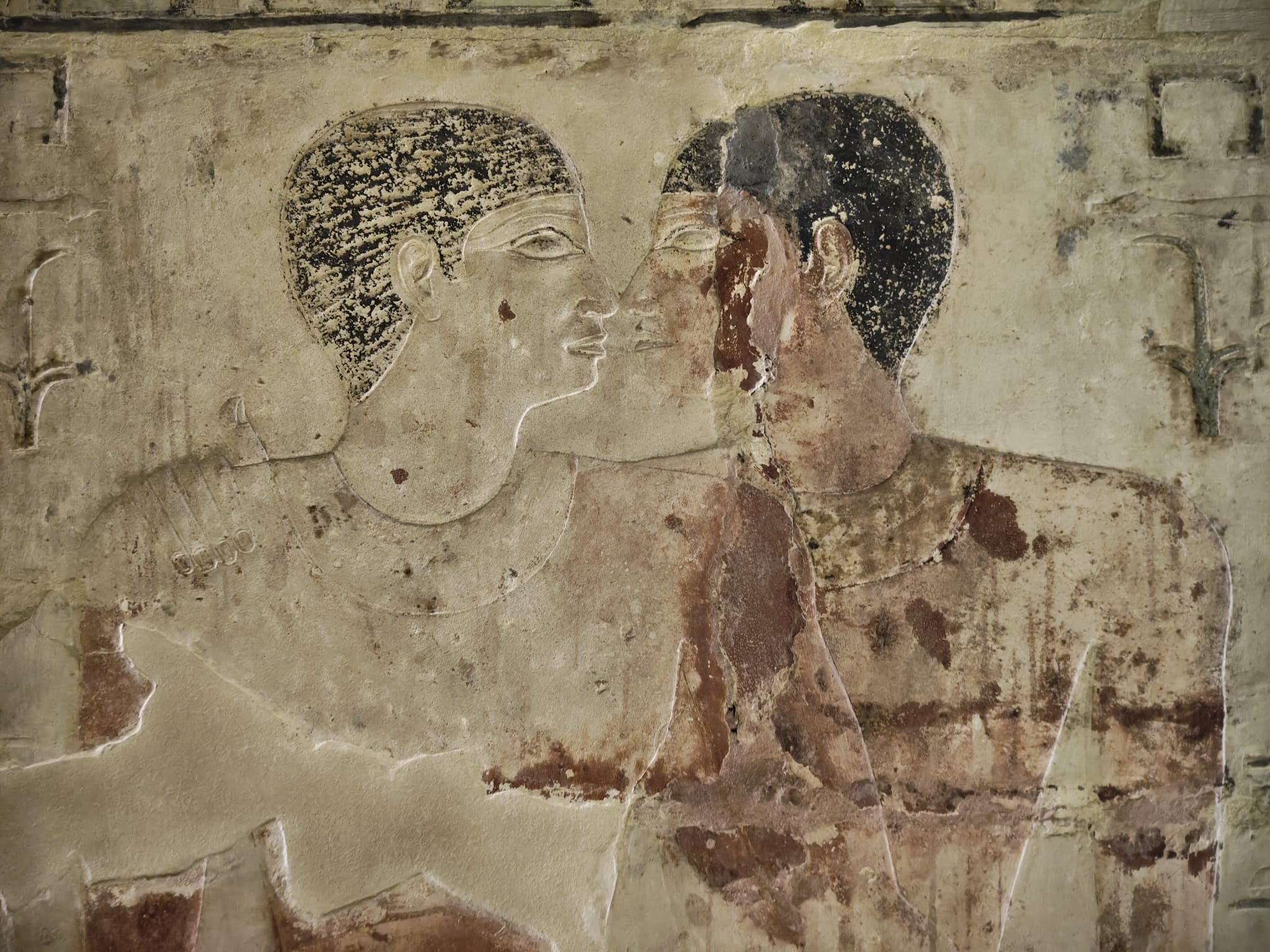
Among the tombs we visited were that of Idut, who reused an earlier tomb belonging to Ihy, and that of Irukaptah, renowned for its impressive sculptural ensemble. The highlight of the day, however, was undoubtedly the so-called “Tomb of the Two Brothers,” belonging to Niankhnum and Khnumhotep.
This monument is famous both for the exceptional state of preservation of its reliefs and for the unusual way in which its owners are depicted. The two men appear together in scenes and poses that, in Egyptian iconography, are typically reserved for married couples, a circumstance that has given rise to numerous interpretations. Some scholars have suggested that they may have been involved in a homosexual relationship, while others have identified them as brothers, twins, or even conjoined twins. Beyond this debate, the tomb is remarkable for another reason: it contains an extraordinary number of dependants identified by name and title, more than in any other tomb of the Old Kingdom. This wealth of information makes it an invaluable source for the objectives of the Invisible Networks Project.
To conclude the day, and although it falls outside our chronological focus, we visited some of the impressive tombs of the New Kingdom necropolis. Among them, the tomb of Horemheb stands out. A distinguished general during the reign of Tutankhamun, he would later become the last pharaoh of the Eighteenth Dynasty.
Day 3. 20/06/2026. SAQQARA
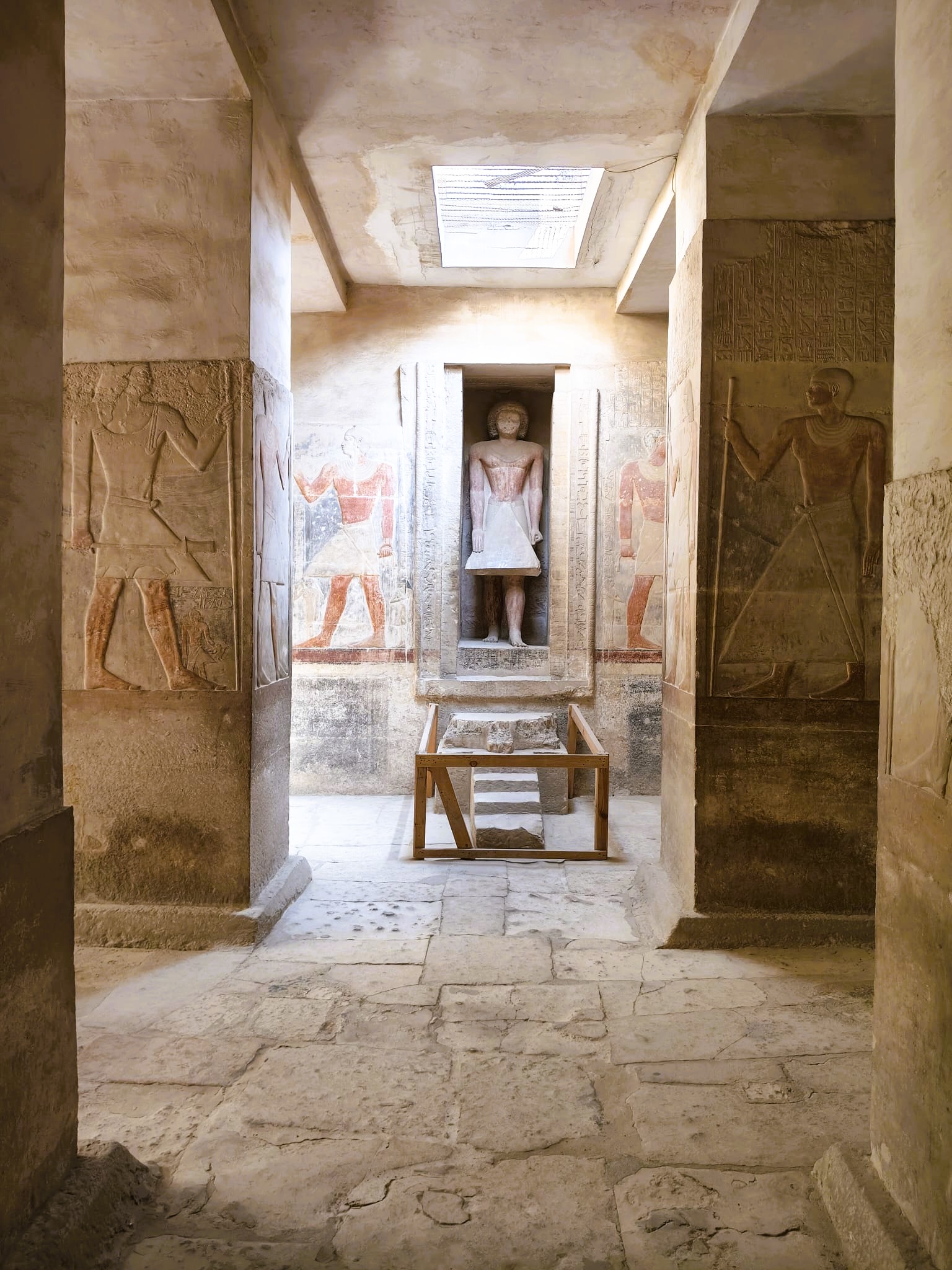
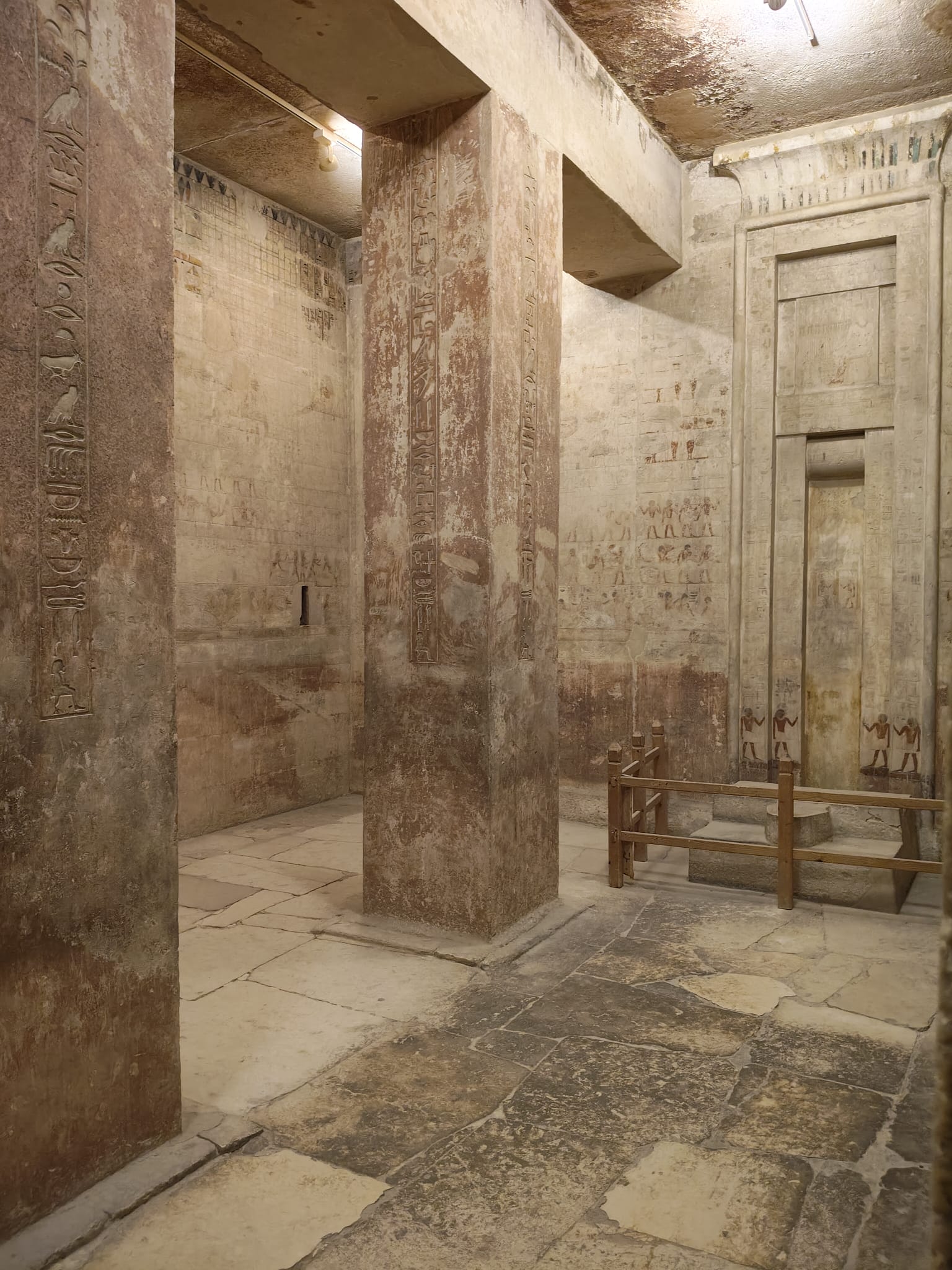
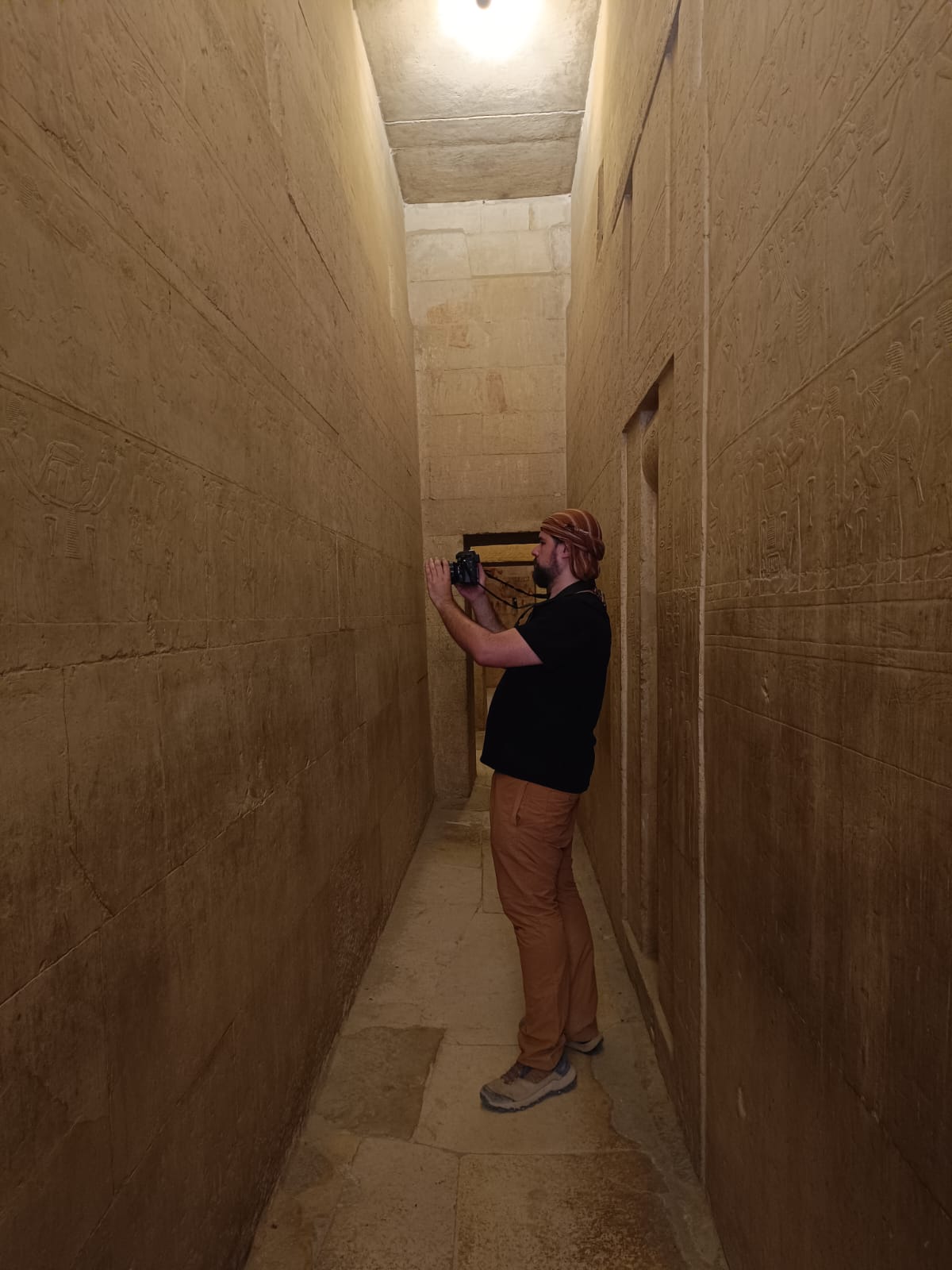
Today we set out for the necropolis of Saqqara. This vast cemetery, associated with the ancient city of Memphis, has its roots in the earliest stages of Egyptian history and preserves some of the country's most iconic monuments. Among them stands the famous Step Pyramid of Netjerikhet (Djoser), widely regarded as the world's first great monumental stone structure.
Our main interest, however, lies in another group of equally remarkable monuments: the mastabas of the high officials of the Fifth and Sixth Dynasties. Richly decorated, these tombs offer a unique window into the daily lives, beliefs, and aspirations of Egypt's elite more than four thousand years ago.
Saqqara is so extensive, and the wealth of its monuments so extraordinary, that it is impossible to explore it fully in a single day. For this reason, today we focused our visit on the area surrounding the pyramid of Teti, the Sixth Dynasty king. There we explored the impressive mastabas of Mereruka (which includes sections dedicated to his wife, Watethathor, and his son, Meryteti), Kagemni, Ankhmahor, and Idut.
We then moved on to the Serapeum area to visit two of Saqqara's most celebrated tombs: the mastabas of Ti and of Ptahhotep and Akhethotep, whose reliefs continue to amaze visitors with their artistic quality and exceptional state of preservation.
As the desert sun began to beat down more intensely, we brought the day to a close with a visit to the Imhotep Museum. This small yet fascinating museum houses some of the most significant finds from the excavations at Saqqara and is also the final resting place of Merenre, a ruler of the Sixth Dynasty.
Tomorrow we will return to Saqqara to continue uncovering its secrets, this time exploring the cemetery that extends around the pyramid of Unas, king of the Fifth Dynasty and a central figure in one of the most fascinating chapters of ancient Egyptian funerary history.
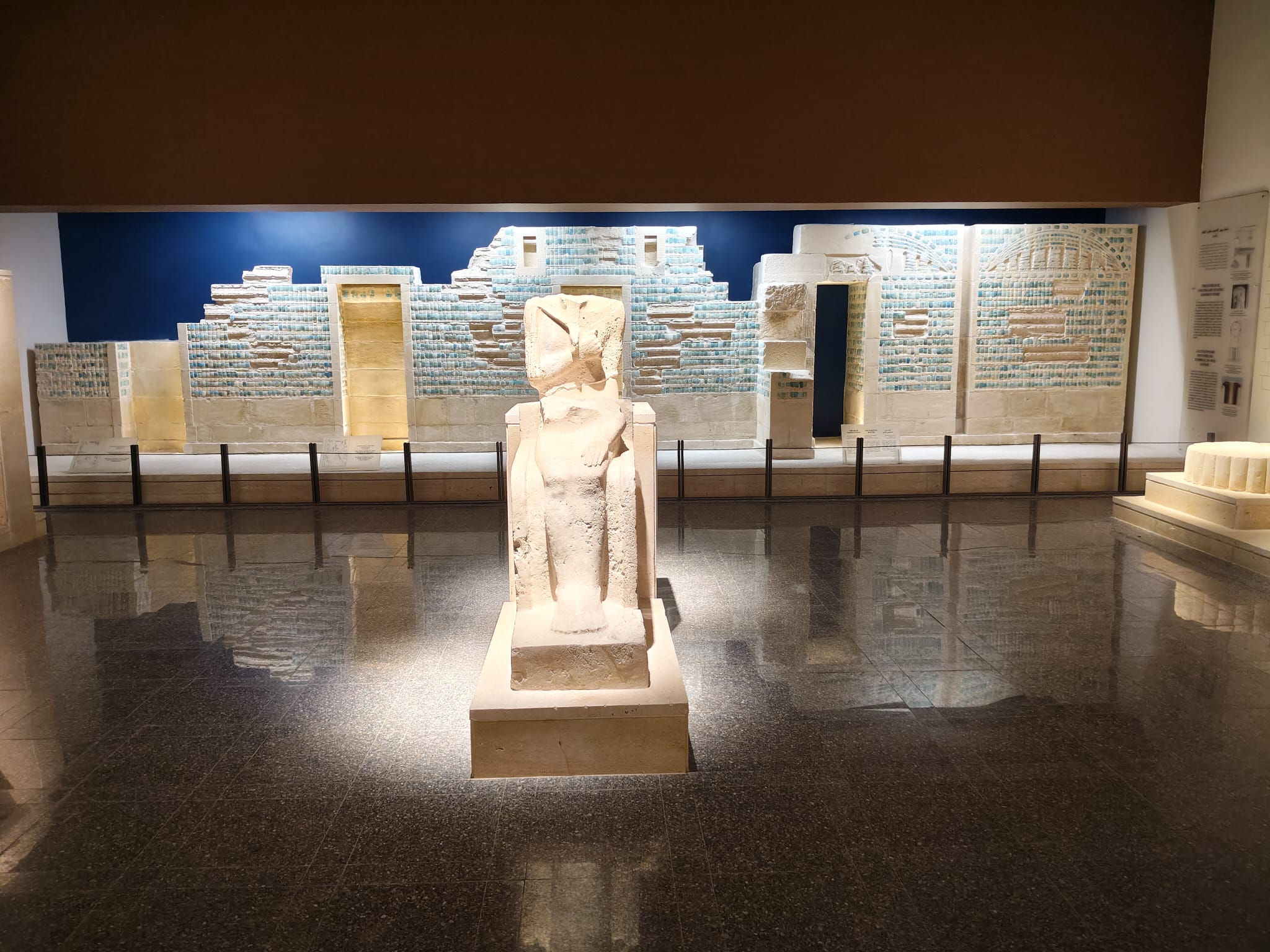
Day 2. 19/06/2026. GRAND EGYPTIAN MUSEUM
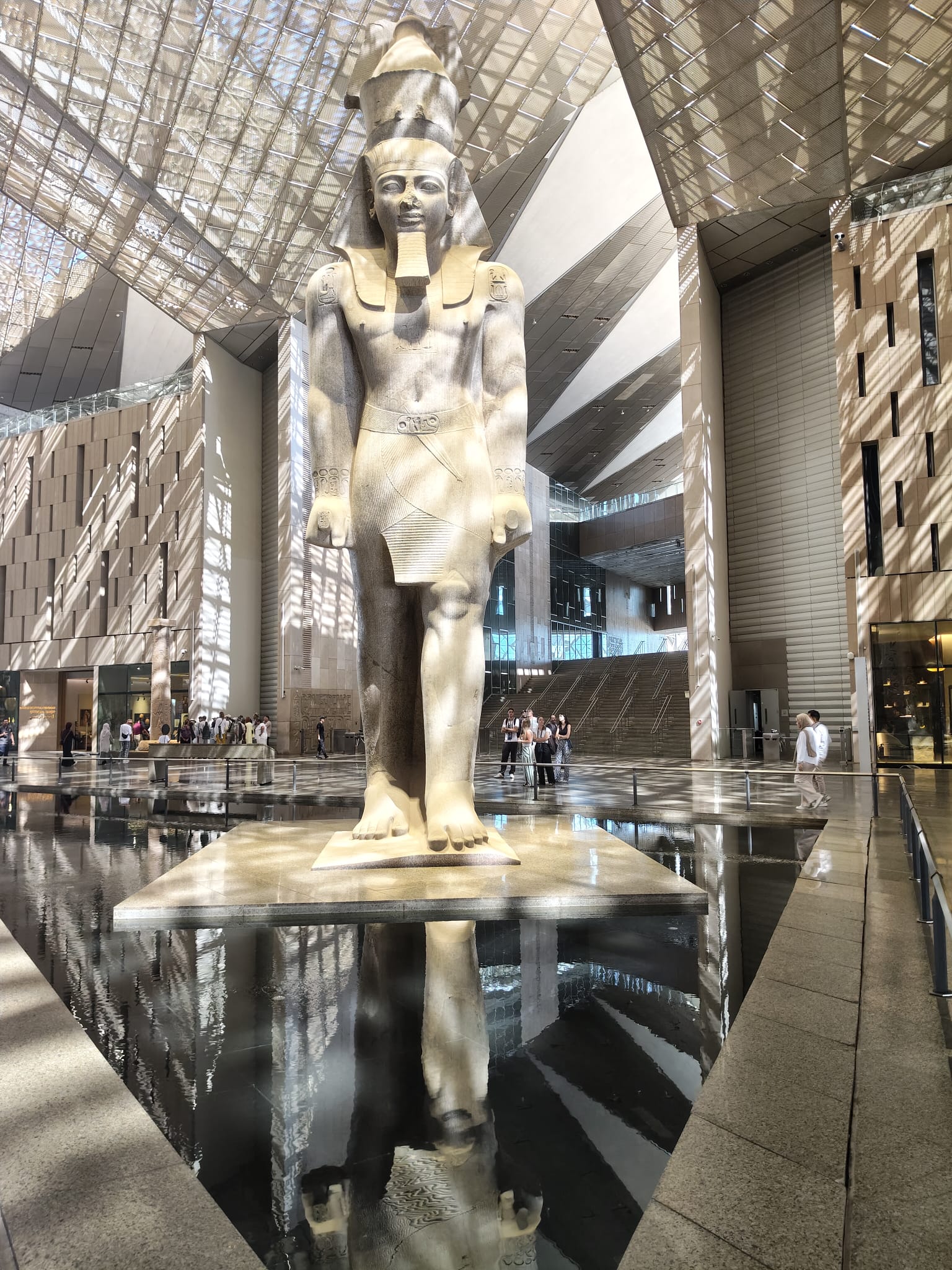
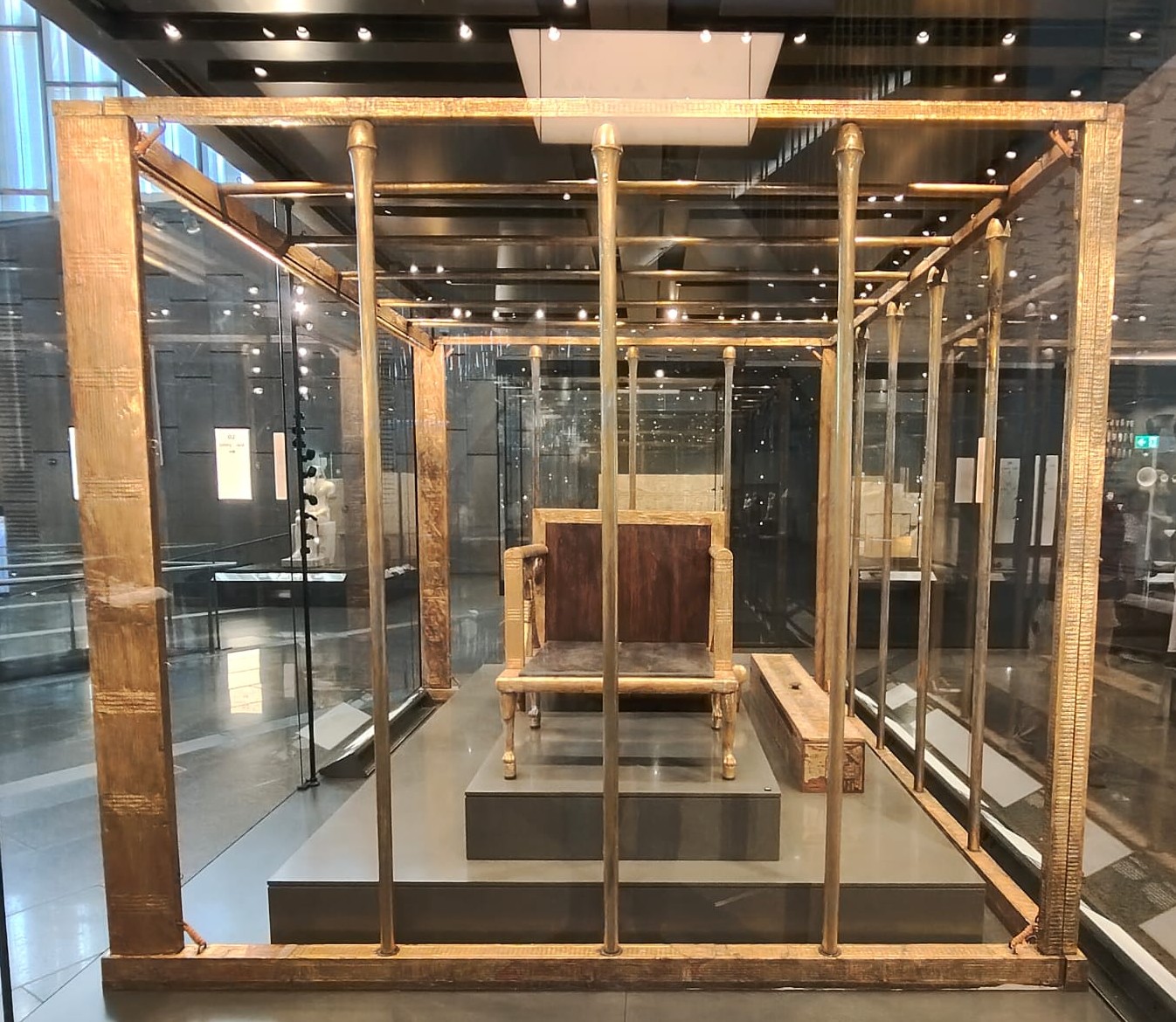
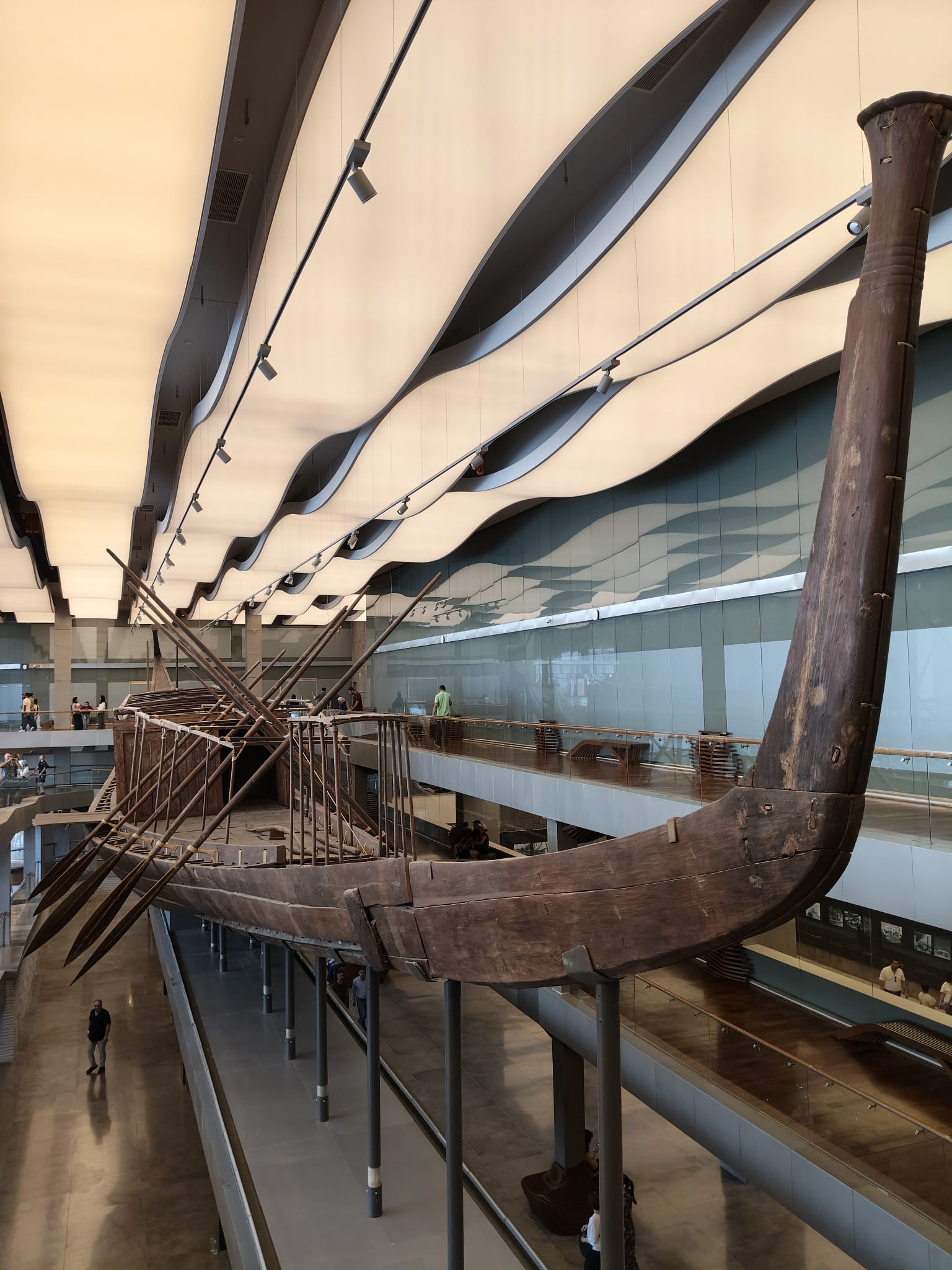
As Fridays are public holidays in Egypt, we took the opportunity to visit the recently inaugurated Grand Egyptian Museum (GEM), a must-see destination for anyone with a passion for history.
In addition to the impressive Tutankhamun collection, which for the first time brings together in a single space all the objects discovered in his tomb, the museum offers a spectacular journey through more than five thousand years of Egyptian history, from Prehistory to the Roman period.
As you might imagine, we particularly enjoyed the galleries devoted to the Old Kingdom, where we were able to admire extraordinary artefacts such as the funerary assemblage of Queen Hetepheres, the mother of Khufu (Cheops), the famous funerary boat of Khufu, and the sarcophagus of Queen Meresankh III.
It was a fascinating visit that allowed us to continue learning while appreciating at close quarters some of the most remarkable objects of ancient Egyptian material culture.
Day 1. 18/06/2026. VISIT TO GIZA
In the days leading up to the signing of our work permits next Monday, the team is based in Cairo, taking the opportunity to visit the necropolises of ancient Men-nefer (Memphis), the capital of Egypt during the Old Kingdom.
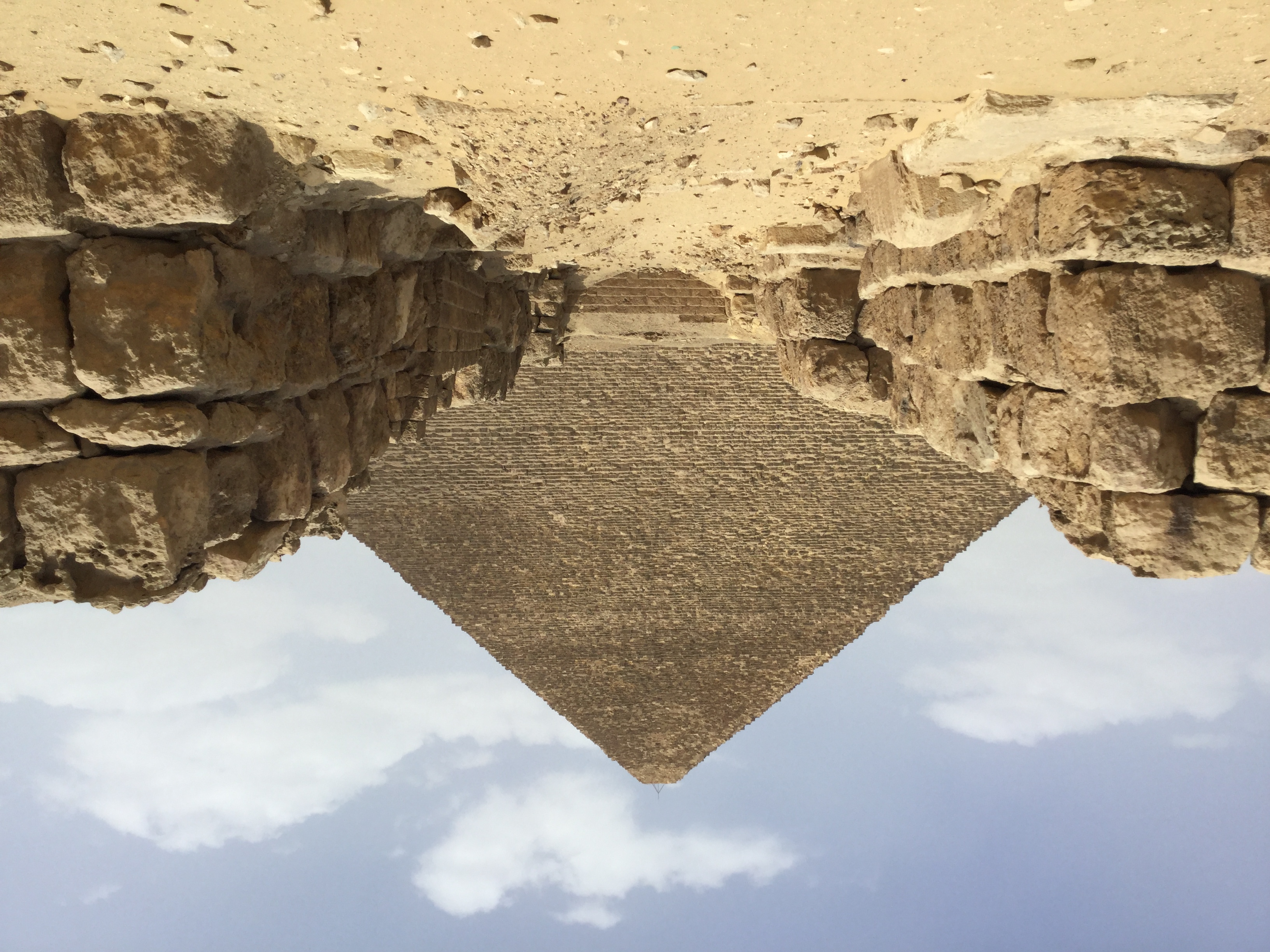
Today we visited the necropolis of Giza, world-famous for the pyramids of Khufu, Khafre and Menkaure. Surrounding these monumental structures are vast cemeteries where members of the Egyptian elite were buried, creating a funerary landscape that continued to grow and evolve over the course of several centuries.
Although the cemetery began to develop during the Fourth Dynasty according to a carefully planned layout, with streets and plots arranged in a grid, the passage of time gradually transformed this original design. New chapels, increasingly monumental in scale, and smaller mastabas filled the available space, creating an ever more complex landscape. In many cases, these tombs clustered around the burial places of particularly influential individuals, reflecting relationships of patronage, status and power.
It is precisely these human connections, preserved in the very fabric of the necropolis, that are of particular interest to our research. Being able to observe them directly on the ground has been an especially valuable experience for our work.
We hope you enjoy the photographs from today's visit!